One of the first things which struck me about the Qur’an the first time I read it was how it can suddenly and jarringly jump to a completely different scene,
I’ve often been told that the Torah and the Injil were only for the Jews. However, two problems: The Pickthall translation doesn’t hide it: He hath revealed unto thee (Muhammad)
John Fontain recently debated David Wood on the Islamic Dilemma, which points out that the Qu’ran both affirms the Torah and Gospel while contradicting them. John has a rather different
Those who attempt to say that the Qur’an teaches the corruption of the earlier scriptures, often appeal to Qur’an 5:48, but this argument turns on the translation of the word
I’m reading through the Qu’ran one last time this year and wanted to follow along with a Tafsir. I discovered Quran Garden which was just the sort of thing I
The Qur’an claims that if it were not from God, there would be many contradictions in it. However, there is one Qur’anic verse which presents an inherent contradiction! In chapter
The sun sets in muddy spring (18:86) Semen comes from between backbone & ribs (86:6-7) Stars are missiles to shoot devils (67:5) If a fly lands in your drink, one
The Qur’an speaks about Allah helping the followers of Jesus and keeping them “uppermost”, but this presents a dilemma since, historically, this has to refer to Trinitarian Christians… which is
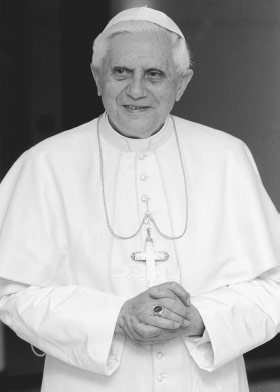
Yesterday, I posted a quotation from Pope John Paul XXIII for this week’s “Wise Words on Wednesday”. When I published it, I was reminded of a conversation I had with Jay about the Papacy.
I have mentioned Jay on this blog before. He was a Protestant with whom I dialogued for a few months several years ago. When speaking about the Pope, here’s what he had to say:
“…[the Pope] has the names of God such as Holy, Father, …Vicar of the Son of God (which means in place of God)” – Jay
So, Jay asserted that Catholics give the Pope “the names of God”.
When I replied to him I responded by working through each those names in turn: “Holy”, “Father” and “Vicar”…
In honour of the anniversary of the Second Vatican Council…
”Consult not your fears, but your hopes and your dreams. Think not about your frustrations, but about your unfulfilled potential. Concern yourself not with what you tried and failed in, but with what it is still possible for you to do.”
Last night I spent the evening teaching Pam’s Youth Group how to swing dance (my voice has just about recovered!).
We wanted to kick things off by showing them a clip of swing dancing so they could see this style of dance in all its glory. We ended up showing them a clip from Swing Kids. I had wanted to show them another video but I couldn’t find it…until this morning:
I literally cannot watch this video without smiling 🙂
Today is the Feast Day of probably my favourite Early Church Father, St. Ignatius of Antioch:
Office Of Readings
Today in the Office of Readings we read a section of one of the letters he wrote on his way to martyrdom sometime around AD 107:
“I am writing to all the churches to let it be known that I will gladly die for God if only you do not stand in my way. I plead with you: show me no untimely kindness. Let me be food for the wild beasts, for they are my way to God. I am God’s wheat and shall be ground by their teeth so that I may become Christ’s pure bread. Pray to Christ for me that the animals will be the means of making me a sacrificial victim for God.
“No earthly pleasures, no kingdoms of this world can benefit me in any way. I prefer death in Christ Jesus to power over the farthest limits of the earth. He who died in place of us is the one object of my quest. He who rose for our sakes is my one desire. The time for my birth is close at hand. Forgive me, my brothers. Do not stand in the way of my birth to real life; do not wish me stillborn. My desire is to belong to God. Do not, then, hand me back to the world. Do not try to tempt me with material things. Let me attain pure light. Only on my arrival there can I be fully a human being. Give me the privilege of imitating the passion of my God. If you have him in your heart, you will understand what I wish. You will sympathize with me because you will know what urges me on.”
– Ignatius of Antioch, Letter to the Romans
Early Church Relationships
Here is a diagram showing the relationships between Jesus, His Apostles, Ignatius of Antioch and some of the other Early Church Fathers:
Want to know more?
If you would like to read more of St. Ignatius’ writings, or listen to them free on MP3, be sure to check out the Church History section of this blog.
The other day a friend of mine sent me a text message saying her coworker was mourning. It was the anniversary of her husband’s death in Afghanistan. Her coworker was asking the question: “Why would God let this happen?”. My friend asked “What should I say?”. Here’s the text message I wrote in reply:
I would say something like “I could talk about some of the different reasons why bad things happen to good people (fallen world, free will, sinful man, God’s plan etc.), but the truth is I don’t know… None of us fully comprehends why terrible things like this happen.
What I do know is that God is the expert at drawing good out of bad, bringing healing out of pain. When Jesus hung on the cross it looked to the world like defeat, but out of the cross came victory over death so Jesus endured it for love of the world.
Your husband, no doubt, joined the military because he thought that it was the right thing to do, to protect the country and people he loved. Jesus did the same.
I can’t explain specifically WHY your husband died, but I CAN say that, if Jesus’ death shows us anything, it’s that suffering is not meaningless and that great acts of love and sacrifice can change the world”
When we encounter someone who is suffering, there is always the temptation to talk about big theological concepts of God’s will, His sovereignty and the fallen nature of humanity. However, in my experience, when people are suffering, this kind of talk is neither helpful nor comforting. We can only point them to the Cross. Apart from the Cross, suffering has no meaning or purpose.
Even then, words are often ineffective. Actions speak much louder. When someone is suffering and I don’t know what to say, there’s a temptation to just avoid that person since I can’t “do” anything. We must fight that temptation! Sometimes all I really need to do is just show up. Be there for my friend. Listen to her. Cry with her. Pray with her. If that person is English, make a cup of tea 🙂
The presence of a friend during a time of suffering speaks much more loudly of the love of God than any words ever could. Love them like Jesus.

 Yesterday, I posted a quotation from Pope John Paul XXIII for this week’s “Wise Words on Wednesday”. When I published it, I was reminded of a conversation I had with Jay about the Papacy.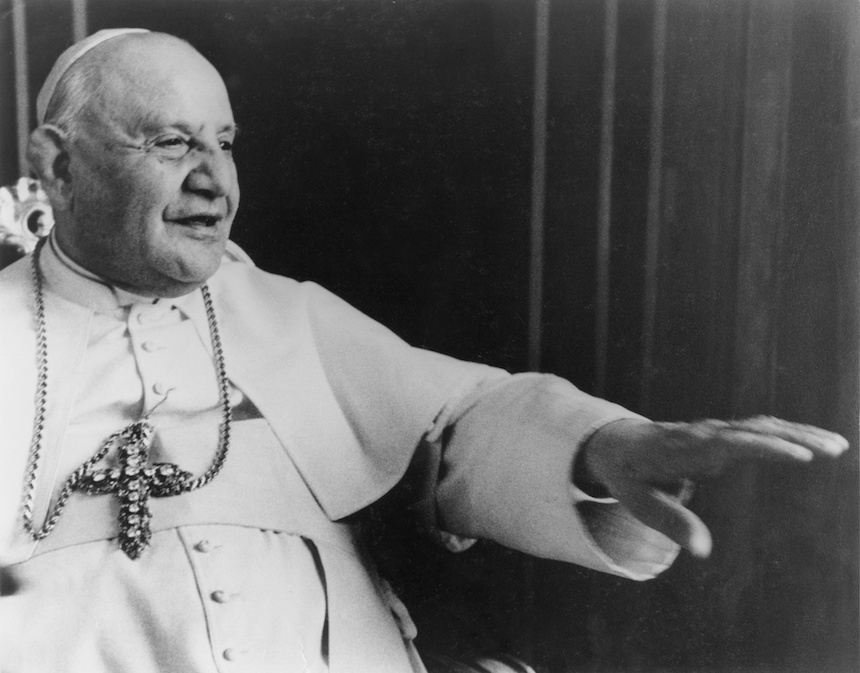
 Last night I spent the evening teaching Pam’s Youth Group how to swing dance (my voice has just about recovered!).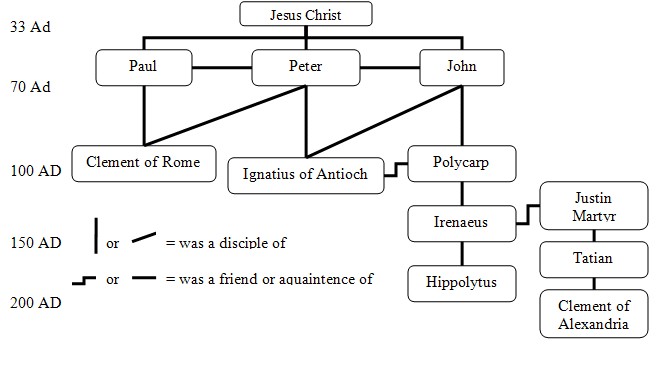
 I am currently listening to
  The other day a friend of mine sent me a text message saying her coworker was mourning. It was the anniversary of her husband’s death in Afghanistan. Her coworker was asking the question:
  A little bit of stand-up…