Friday Frivolity: Rappin’ for Jesus
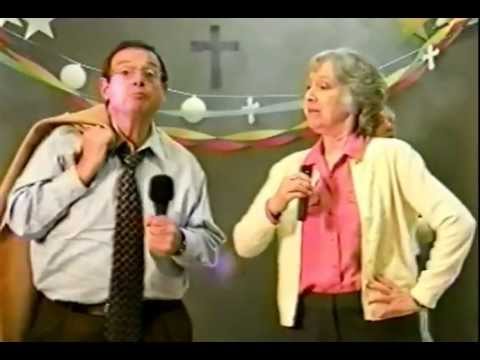 So bad…so, so bad…and more than a little racist… Why do Christians try so hard to be cool?
The article Rappin’ for Jesus first appeared on RestlessPilgrim.net
"We are travellers…not yet in our native land" – St. Augustine

So bad…so, so bad…and more than a little racist… Why do Christians try so hard to be cool?
The article Rappin’ for Jesus first appeared on RestlessPilgrim.net
On Thursday I wrote a little bit about John 6 and the Eucharist in response to a conversation I had with Gerry, a non-Catholic. Today I would to take a very brief tour of the belief in the Eucharist in Early Church.
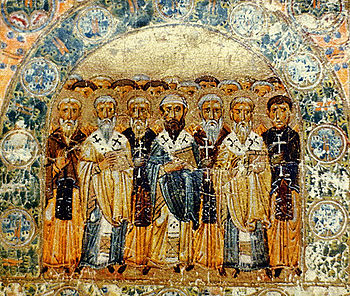
The problem with saying that Jesus is only symbolically present in the Eucharist is that apparently nobody told this to the Early Church. Below are a collection of quotations from Christian documents of the 1st and 2nd Century. These demonstrate without a doubt that Christians have, from the earliest times, understood the Eucharist to be a sacrifice performed by priests in which Jesus Christ is truly present:
 The Dominican Sisters of Mary, Mother of the Eucharist will be in tonight’s season finale of American Bible Challenge. You can catch it on the Game Show Network at 9pm Eastern:
The article Who says Catholics don’t know their Bible? first appeared on RestlessPilgrim.net
Today I’d like to talk a little bit about Jesus’ Real Presence in the Eucharist.
A little a while ago I was conversing via email with a non-Catholic called Gerry. We spoke briefly about the Eucharist and he graciously agreed to allow me to post some of our conversation here. Here’s what he said:
“And the mother of it all, in my opinion, is the Eucharist. Transubstantiation. Utterly abominable. Christ was a “victim” once and it was sufficient forever!
The mass is as unholy as a thing can be. We eat His flesh and drink His blood in the spiritual sense, not literal. And to think they even bow down and worship and kiss that cracker because it is (supposedly) Christ in the flesh. And God won’t judge these abominations?!” – Gerry, Email #2
I’m not going to offer a complete defense of the Eucharist here, many other more capable than I have done that already. Instead, today I’d just like to ask a couple of questions concerning one Scripture passage and then on Friday to take a brief look at Christian history.
Below is part of the “Bread of Life” discourse given by Jesus in John’s Gospel:
I am the living bread that came down from heaven. Whoever eats this bread will live forever. This bread is my flesh….Very truly I tell you, unless you eat the flesh of the Son of Man and drink his blood, you have no life in you. Whoever eats my flesh and drinks my blood has eternal life, and I will raise them up at the last day. For my flesh is real food and my blood is real drink. Whoever eats my flesh and drinks my blood remains in me, and I in them. – John 6:51-54
There are two main questions I’d like to raise here:
1. How did Jesus’ audience understand Him?
After giving this sermon, many people who had been following Jesus left Him. Why did they leave? It’s because they took Him at His word! They believed that He was saying that they had to actually eat His flesh and drink His blood.They took his words literally!
Souls were lost that day because they assumed Jesus wasn’t speaking metaphorically. This begs the question: if Jesus was speaking figuratively, why did He allow so many to leave Him over a something that was just a misunderstanding? Would God really be that cruel?
2. What would He have had to say if He wanted to speak literally?
When speaking with people who interpret John 6 figuratively, I propose the following thought experiment. Firstly, I assume that they are correct in their interpretation of John 6. Jesus was speaking figuratively. However, I then offer the following challenge: if you wanted to go back and alter John 6 to make Jesus speak literally about His flesh, what would you change? Or, put another way, if Jesus had wanted to speak of his flesh literally, what could He have said to convince you that he was speaking literally and not figuratively? I mean, how could His language have been any more extreme than “my flesh is real food“?
So that’s an extremely brief look at John 6. On Friday we’ll look at the Christian witness of the Eucharist in the first two centuries.
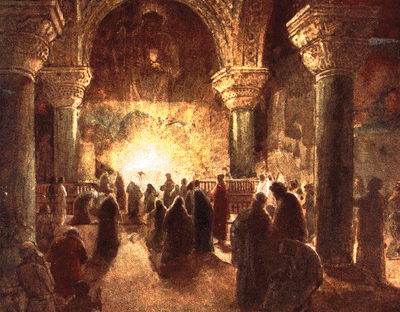
The article Real Food, Real Drink first appeared on RestlessPilgrim.net
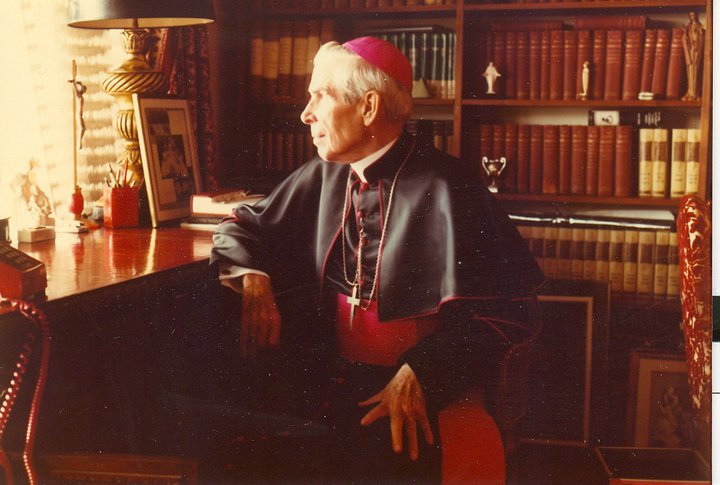
“In the last analysis, no love is ever driven out; it is only conquered by another love. One cannot overcome a love of alcohol until he finds some other love which is more compelling”
– Fulton Sheen, Guide to Contentment
The article A love more compelling first appeared on RestlessPilgrim.net
EWTN is one of the major Catholic TV outlets. However, they also have a large library of audio files which can be freely available for download:
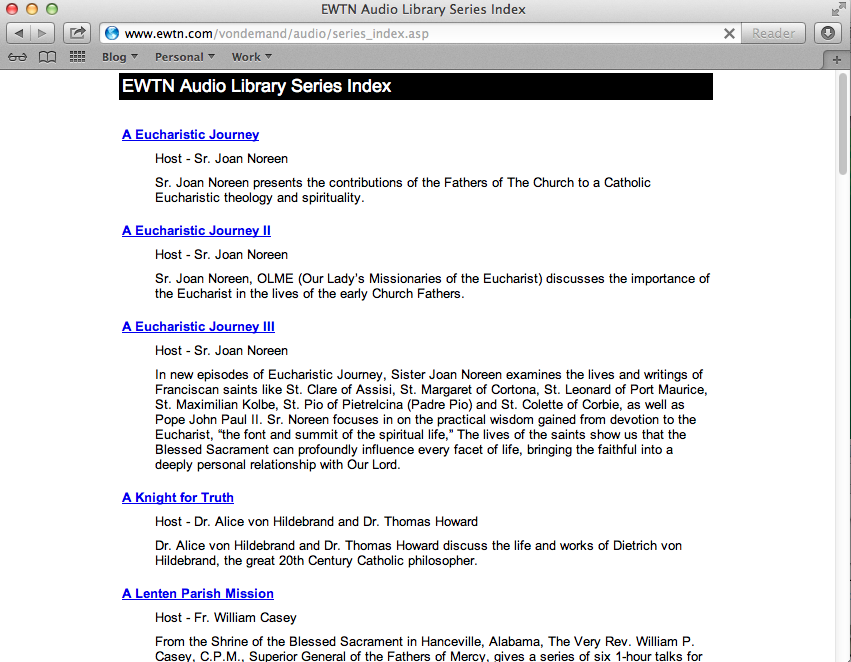
The article EWTN Audio Programmes first appeared on RestlessPilgrim.net
 The Catechism of the Catholic Church offers three main guidelines for the interpretation of Scripture.
#112 (1) Be especially attentive “to the content and unity of the whole Scripture”. Different as the books which compose it may be, Scripture is a unity by reason of the unity of God’s plan, of which Christ Jesus is the center and heart, open since his Passover.
#113 (2) Read the Scripture within “the living Tradition of the whole Church”. According to a saying of the Fathers, Sacred Scripture is written principally in the Church’s heart rather than in documents and records, for the Church carries in her Tradition the living memorial of God’s Word, and it is the Holy Spirit who gives her the spiritual interpretation of the Scripture (“. . . according to the spiritual meaning which the Spirit grants to the Church”81).
#114 (3). Be attentive to the analogy of faith.82 By “analogy of faith” we mean the coherence of the truths of faith among themselves and within the whole plan of Revelation.
But what do each of these mean? Here’s my paraphrase:
1. Be especially attentive “to the content and unity of the whole Scripture”
Does my interpretation fit within the overall context of the passage, that particular book of Scripture and all the books of the Bible? How does it fit in within God’s fatherly plan (oikonomia)
2. Read the Scripture within “the living Tradition of the whole Church”
Is my interpretation in line with the consensus of the Early Church Fathers, the Saints, the councils and popes and the Liturgy of the Church throughout the centuries?
3. Be “attentive to the analogy of faith”.
The “analogy of faith” is sometimes called the “rule of faith” and refers to the standard for belief. For the Catholic this means: does my interpretation logically and coherently fit into the Catholic Faith, which is the complete revelation of Jesus Christ as revealed in Sacred Scripture, Sacred Tradition and taught by the Magisterium, the teaching authority of the Church? If it conflicts with other parts of the faith, the interpretation is probably wrong.
The article Catholic Biblical Interpretation first appeared on RestlessPilgrim.net