Friday Frivolity: What’s cookin’?

"We are travellers…not yet in our native land" – St. Augustine

It’s been a while since I’ve done a “Catholic Bucket List” item, so here’s a simple one:
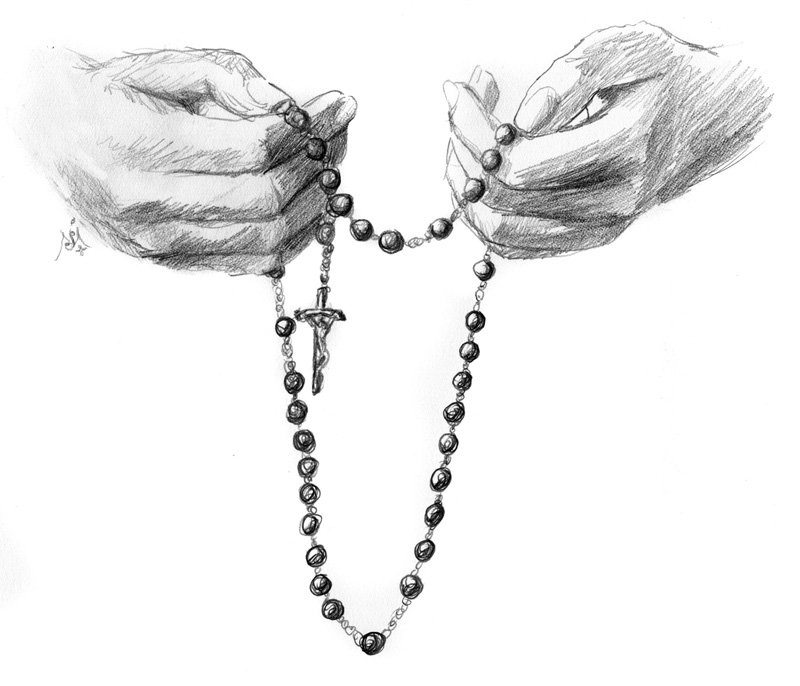
Bucket List Item #7: Pray the rosary


Today is the March For Life in Washington DC. This past Sunday, my priest noted the providential intersection between this event and the Week of Prayer for Christian Unity which began last week.
Although it can sometimes be a source of conflict, protection of the unborn and the pro-life cause is really an issue which can unite Christians of all denominations together, as well as with people of good will…
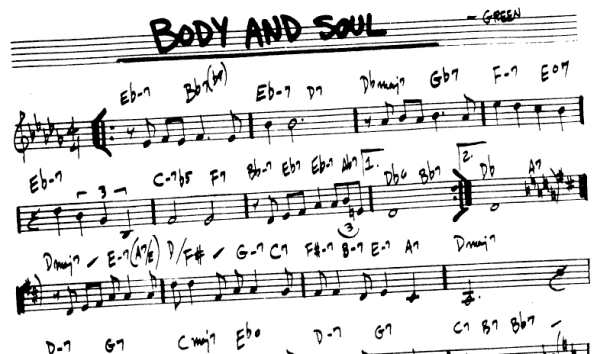
“To look upon a woman lustfully is to separate her body from her soul, and thus to bring about death. The death which is summoned is a spiritual one, but it comes to him who would attempt to bring about such a divorce of body and soul. What God has joined together, let no man rent asunder”
– Anonymous
Today’s post is another entry in response to a recent Facebook conversation. This post won’t be as long as yesterday’s post, but I would like to say a few words about Jesus’ unsettling teaching in Chapter 18 of Matthew’s Gospel:
“…if your hand or your foot causes you to sin cut it off and throw it from you; it is better for you to enter life maimed or lame than with two hands or two feet to be thrown into the eternal fire.
And if your eye causes you to sin, pluck it out and throw it from you; it is better for you to enter life with one eye than with two eyes to be thrown into the hell of fire. – Matthew 18:7-9
This passage from Matthew’s Gospel is rather interesting in that, in my experience, it’s a verse which fundamentalists never take literally (along with John 6 and Acts 2:38). Now, you’ll find pockets of Christians who handle snakes (Mark 16:18), but I have yet to meet someone to apply the same literalistic hermeneutic to that passage. The funny thing about this passage is that the literal sense here is clear – it is better to lose everything in this life rather than to lose Heaven – even hands and eyes.
The central message Jesus teaches here is that we can’t take sin lightly. You can’t treat sin as though it were something with which you can negotiate. You don’t negotiate with cancer! You don’t sit down with a tumour and ask it not to grow too large. No, you cut that stuff out! You eradicate it as quickly as possible because, if left unchecked, it’ll be your ruin. The same is true with sin.
What might be an application of this passage? Well, I would say that we can understand this passage in the context of what is known in Catholic circles as “the near occasions of sin”, which the times and places where we know we can easily fall from grace. In particular, I’d like to apply this passage to the issue of porn.
If you know you are tempted to watch porn when staying a hotel, the best thing to do is cut it off at the source, literally, by phoning ahead and asking the hotel to put a block the channels on the TV. I remember Matt Fradd referencing this passage when speaking about the temptation to watch porn on a smart phone:
“If your iPhone causes you to sin, disconnect it and throw it from you; it is better for you to enter life with a dumb phone and poor connectivity, rather than to be thrown into the eternal fire with a touchscreen and wifi access”
 Yesterday, I had a conversation on Facebook about a passage concerning the “eunuchs” in Matthew’s Gospel:
10 The disciples said to him [in response], “If such is the case of a man with his wife, it is not expedient to marry.”
11 But [Jesus] said to them, “Not all men can receive this precept, but only those to whom it is given. 12 For there are eunuchs who have been so from birth, and there are eunuchs who have been made eunuchs by men, and there are eunuchs who have made themselves eunuchs for the sake of the kingdom of heaven. He who is able to receive this, let him receive it.”
– Matthew 19:10-12
What does this text mean? Here’s a five minute explanation…