Interview with a stripper
Last month I had a conversation with someone on Facebook who saw strip clubs as perfectly wholesome places. When I meet someone who holds an opinion like this, I usually invite them to read the following interview:
"We are travellers…not yet in our native land" – St. Augustine

Last month I had a conversation with someone on Facebook who saw strip clubs as perfectly wholesome places. When I meet someone who holds an opinion like this, I usually invite them to read the following interview:
 If you want to go visit a “hand-raising” church…

 A couple of months ago we had a guest post here at Restless Pilgrim from Tom Massoth. Well, today we have another guest post, this time from my long-time friend, John. I met John for the first time during a short stay in San Diego. A couple of years later, I returned to the USA and we had the chance to be neighbours. I take personal credit for him meeting his wife!
Today’s post is an abridged version of an article John wrote a while ago where he discussed the meaning of a phrase you commonly hear in Catholic circles…
It seems to be something of a catch-phrase in modern Catholic culture, but what do we really mean when we say “offer it up”? Is it more than just a religious way of saying “Suck it up” or “Quit complaining”?
“Offer it up” is more than a simple invitation to prayer. Those three words are an invitation to participate in the gospel.
Read more
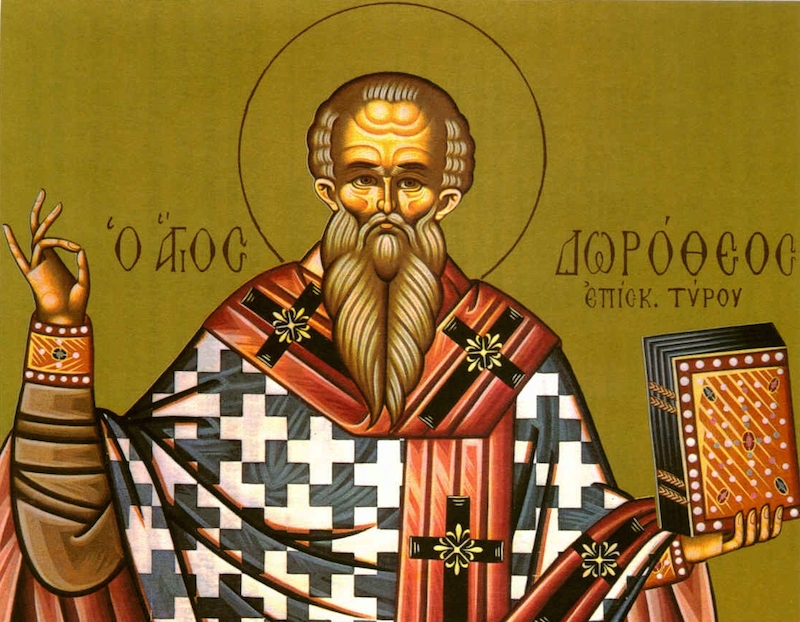
Who hated sin more than the Saints? But they did not hate the sinners at the same time, nor condemn them. But they suffered with them, gave them remedies as sickly members, and did all they could to heal them
– St. Dorotheos of Gaza
If you’ve been reading my blog for a while now, you’ll know that a good portion of my posts either come from questions people have asked me or from my own wondering about a particular subject. Today’s post falls into the latter category…
When Jesus preached to the crowds, Scripture records that one time He ascended a mountain to teach them (Matthew 5:1) and on another occasion He got into a boat and moved a little way from the shore (Luke 5:3). There is theological significance to both of these actions, but there’s also a very practical reason that the Lord did this – He wanted His preaching to be heard clearly by as many people as possible.
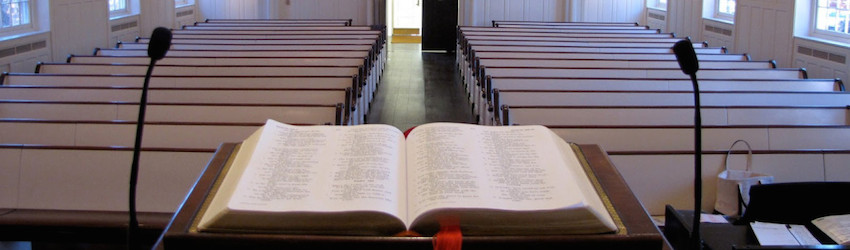
The necessity to clearly hear the words of preaching continues today and we see it reflected in the architecture of our church buildings in the presence of a pulpit/ambo/lecturn.
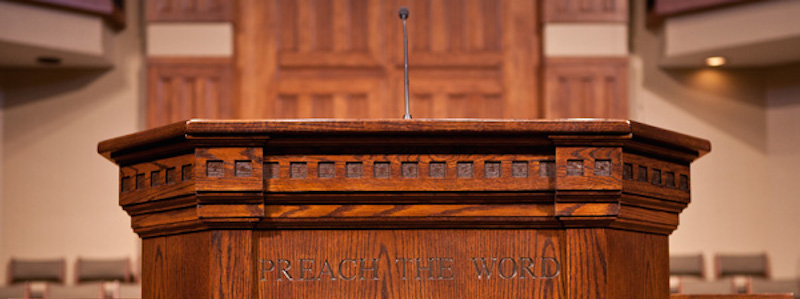
For quite a while, I’ve noticed that Catholic liturgists typically use the word “ambo” to describe the preacher’s platform, rather than “pulpit”, which you hear more often both in the Protestant world and in popular culture. However, is there really a difference between “ambo” and “pulpit”, or is this just a case of Catholic/Protestant “potato/potahto”?
When confusion’s my companion
And despair holds me for ransom
I will feel no fear
I know that You are near
When I’m caught deep in the valley
With chaos for my company
I’ll find my comfort here
‘Cause I know that You are near
My help comes from You
You’re right here, pulling me through
You carry my weakness, my sickness, my brokenness all on Your shoulders
Your shoulders
My help comes from You
You are my rest, my rescue
I don’t have to see to believe that You’re lifting me up on Your shoulders
Your shoulders
You mend what once was shattered
And You turn my tears to laughter
Your forgiveness is my fortress
Oh Your mercy is relentless
My help is from You
Don’t have to see it to believe it
My help is from you
Don’t have to see it, ‘cause I know, ‘cause I know it’s true
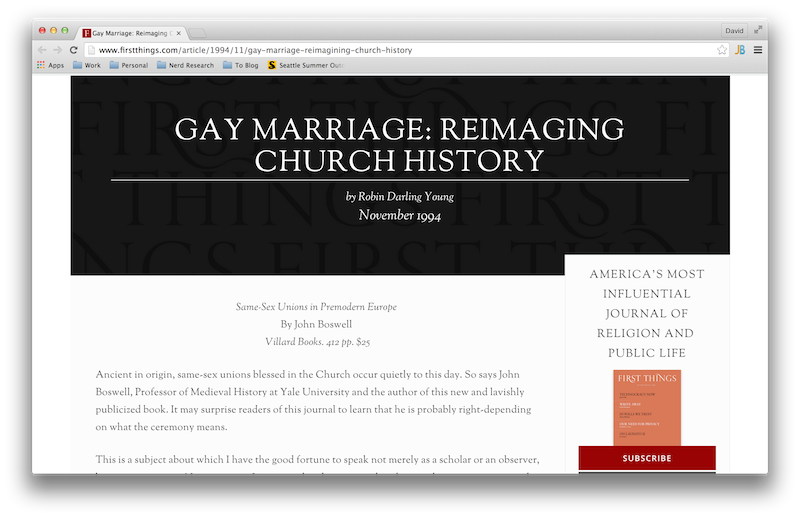
In the wake of the SCOTUS decision concerning same-sex marriage, I’ve seen lots of people on Facebook making the assertion that the Church used to perform same-sex weddings in antiquity. In defense of this quite provocative assertion, typically a single authority is cited, the Professor of Medieval History at Yale University, John Boswell.
I was planning on writing a rebuttal to this assertion, but after doing a little bit of googling, I came across this article by Robin Darling Young who reviews Boswell’s book and does a tremendous job on demonstrating the considerable bias required to reimagine Church history in an attempt to support such an outlandish hypothesis: