Music Monday: Lord, Have Mercy

From our shame, from our guilt O Lord
Cleanse us from our sin make us holy
In your Name, in your blood O Lord
Blot out our offense, make us worthy

Lord have mercy
We’re begging for mercy
Jesus only you make us worthy

From our weakness, from our betrayal
Cleanse us from our sin make us holy
In your kindness, in your compassion
Blot out our offense make us worthy

Lord have mercy
We’re begging for mercy
Jesus only you make us worthy

Remember me when you come into your kingdom

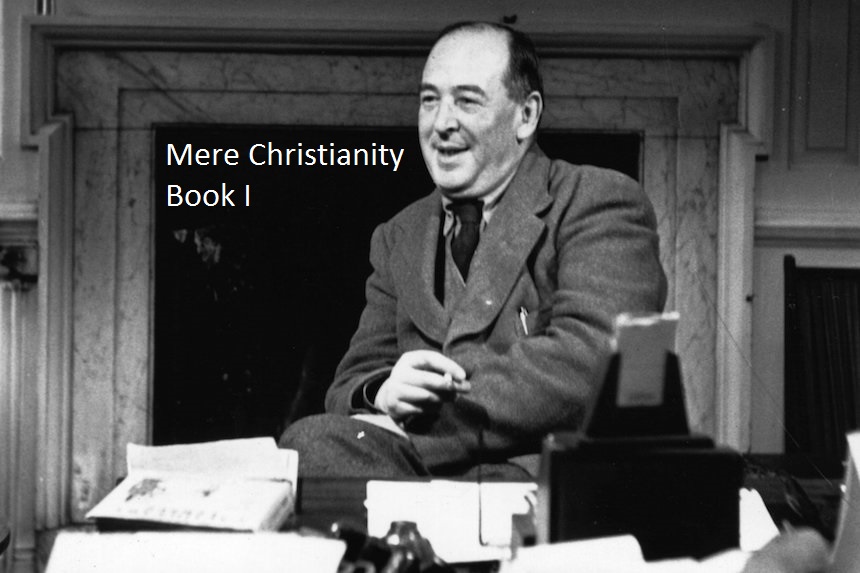
Mere Christianity – Book I – Chapter 2 (“Some Objections”)

Book 1

Notes & Quotes

Here are my notes for Chapter 2 (Book 1) of Mere Christianity. In this chapter, Jack outlines objections which might be raised in response to his assertion that there is a Moral Law of which we all fall short…

Objection #1: “Isn’t what you call the Moral Law simply our herd instinct?

There is a difference between instinct and the Moral Law.

“…feeling a desire to help is quite different from feeling that you ought to help whether you want to or not”

The Moral Law judges between instincts.

“…[there is] a third thing which tells you that you ought to follow the impulse to help, and suppress the impulse to run away. Now this thing that judges between two instincts…cannot itself be either of them…it usually seems to be telling us to side with the weaker of the two impulses…[and] often tells us to try to make the right impulse stronger”

No instinct dominates, every instinct has its place.

“The Moral Law tells us the tune we have to play: our instincts are merely the keys…[a piano] has not got two kinds of notes on it, the ‘right’ notes and the ‘wrong’ ones… There is none of our impulses which the Moral Law may not sometimes tell us to suppress, and none which it may not sometimes tell us to encourage”

Objection #2: “Isn’t what you call the Moral Law just a social convention, something that is put into us by education?”

Learning something doesn’t automatically make it a convention.

“…[this takes] for granted that if we have learned a thing from parents and teachers, then that thing must be merely a human invention. We all learned the multiplication table at school…but surely it does not follow that the multiplication table is simply a human convention…[which] might have made different if they had liked?”

Some things we learn are only convention, but others are not.

“…some of the things we learn are mere conventions…to keep to the left of the road…and others of them, like mathematics, are real truths. The question is to which class the Law of Human Nature belongs”

The Law of Human Nature is real truths:

1. It is universal

“…the differences are…not nearly so great as most people imagine…mere conventions…may differ to any extent”

2. We compare moralities, thinking one better than another

“We do believe that some moralities are better than others… The moment you say that one set of moral ideas can be better than another, you are, in fact, measuring them both by a standard, saying that one of them conforms to that standard more nearly than the other…real Right, independent of what people think”

Objection #3: “Three hundred years ago people in England were putting witches to death. Was that what you call the Rule of Human Nature or Right Conduct?”

There is a difference between belief about facts and morality.

“You would not call a man humane for ceasing to set mousetraps if he did so because he believed there were no mice in the house”

In India they don’t eat cows. In America we do. The morality is the same (don’t eat your ancestors), but the understanding is different (cows are not your ancestors)

Discussion Questions

1. How does Jack make a distinction between the Law of Human Nature and heard instinct?

2. How does Jack distinguish between social convention and real truth, like Mathematics? Why might we think that the Law of Human Nature fall into the latter category?

C.S. Lewis Doodle

There’s no doodle for this chapter! 🙁

Mere Christianity – Book I – Chapter 1 (“The Law of Human Nature”)

Book 1

Notes & Quotes

Here are my notes for the first chapter of Mere Christianity. In this chapter, Jack argues two main points:

1. There is a Law of Human Nature

“…the man who makes [these objections] is not merely saying that the other man’s behaviour does not happen to please him. He is appealing to some kind of standard of behaviour which he expects the other man to know about”

“Quarrelling means trying to show that the other man is in the wrong. And there would be no sense in trying to do that unless you and he had some sort of agreement as to what Right and Wrong are; just as there would be no sense in saying that a footballer had committed a foul unless there was some agreement about the rules of football”

(a) The Law of Human Nature is the only one which we can choose to disobey

“a body could not choose whether it obeyed the law of gravitation or not, but a man could choose either to obey the Law of Human Nature or to disobey it… As a body [a man] is subjected to gravitation…if you leave him unsupported in mid-air, he has no more choice about falling than a stone has…but the law which is peculiar to human nature…is the one he can disobey if he chooses”

(b) You may still find a few people who don’t really know the Law of Human Nature

“…you might not find an odd individual here and there who did not know it, just as you find a few people who are colour-blind or have no ear for a tune”

(c) Differences in morality are not that great

“…some people say…different civilisations and different ages have had quite different moralities. But this is not true. There have been differences between their moralities, but these have never amounted to anything like a total difference”

“…think what a totally different morality would mean. Think of a country where people were admired for running away in a battle, or where a man felt proud of double-crossing all the people who had been kindest to him. You might just as well imagine a country where two and two made five”

(d) Those who deny a real Right and Wrong will accidentally betray themselves

“He may break his promise to you, but if you try breaking one to him he will be complaining ‘It’s not fair’ before you can say Jack Robinson”

We see the presence of the Moral Law more clearly in our reactions, rather than our actions.

2. We do not keep this Law 

(a) That doesn’t change the Law itself

“…people sometimes get their sums wrong; but they are not a matter of mere taste and opinion any more than the multiplication table”

(b) Our excuses prove we do not keep the Law

“If we do not believe in decent behaviour, why should we be so anxious to make excuses for not having behaved decently?”

(c) We demonstrate the Law by only make excuses for the bad things, not the good.

“…you notice that it is only for our bad behaviour that we find all these explanations. It is only our bad temper that we put down to being tired or worried or hungry; we put our good temper down to ourselves”

Discussion Questions

1. What does Lewis argue we can we learn from the way people quarrel?

2. Why should we believe that the Law of Human Nature is real?

3. Do you think it’s true that we don’t live according to the Law of Human Nature?

C.S. Lewis Doodle

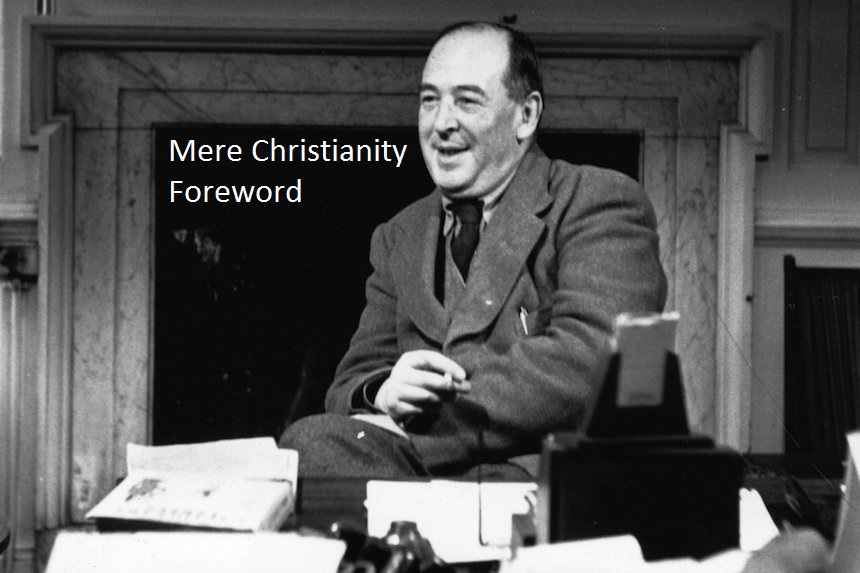
Mere Christianity – Foreword

Foreword

Notes & Quotes

Here are my notes from the Foreword of Mere Christianity which, in my edition is written by Kathleen Norris. Her words are in green and Lewis’ are in dark blue.

1. CS Lewis served in the trenches of World War I

2. During the Battle Of Britain, CS Lewis was an air raid warden and gave talks to the men of the Royal Air Force

3. These pilots had a life-expectancy of thirteen bombing missing and therefore these talks were not purely academic endeavours

“This book, then, does not consist of academic philosophical musings. Rather it is a work of oral literature, addressed to a people at war”

4. This therefore makes the content of his talks all the more surprising

“How strange it must have seemed to turn on the radio, which was every day bringing news of death and unspeakable destruction, and hear one man talking…about decent and humane behavior, faith play, and the importance of knowing right from wrong”

5. Lewis gets to the heart of the matter…

“All of our notions of modernity and progress and all our advances in technological expertise have not brought an end to war. Our declaring the notion of sin to be obsolete has not diminished human suffering”

6. …and tells us where the problem is

“The problem, C. S. Lewis insists is us

7. Lewis told his friends that this generation had never in fact been told in basic terms what Christianity is all about.

“Lewis seeks…to help us see the religion with fresh eyes, as a radical faith whose adherents might be likened to an underground group gathering in a war zone, a place where evil seems to have the upper hand, to hear messages of hope from the other side”

8. Lewis explains his outlook on humanity

“Lewis once stated, that ‘there are no ordinary people’ and that ‘it is immortals whom we joke with, work with, marry, snub and exploit’

9. Lewis calls his readers/listeners to embrace the fullness of life by embracing Christianity

“The Christianity Lewis espouses is humane, but not easy…we must decide what sort of immortals we wish to be… As Lewis reminds us, with his customary humor and wit, ‘How monotonously alike all the great tyrants and conquerors have been: how gloriously different the saints’

Discussion Questions

1. In what way do you think war influenced Jack in writing this book and in the way it was received?

2. Why did Jack decide to make this presentation of Christianity?

3. How would you describe his Christianity?

Wise Words on Wednesday: Giver of every good gift

basil-the-great

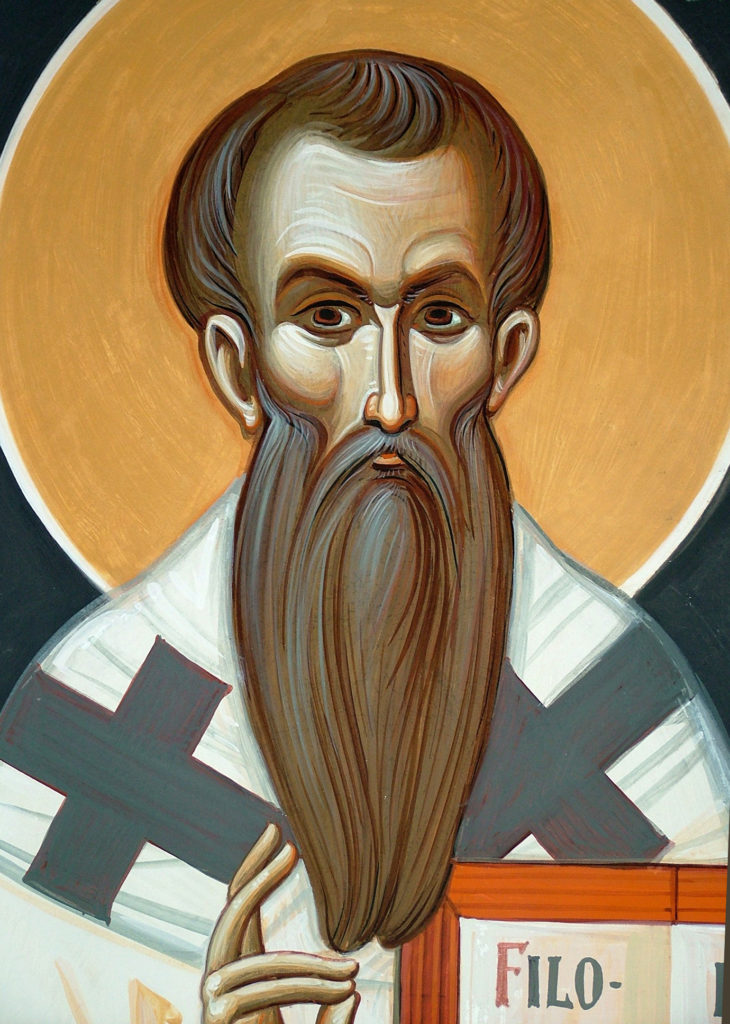
As you take your seat at table, pray… offer thanks to the Giver…remember Him Who supplies you with this gift, to make your heart glad and to comfort your weakness. Has your need for taking food passed away? Let not the thought of your Benefactor pass away too.

As you are putting on your tunic, thank the Giver of it. As you wrap your cloak about yourself, feel yet greater love to God…

Is the day done? Give thanks to Him Who has given us the sun for our daily work, and has provided for us a fire to light up the night and to serve the rest of the needs of life”

– St. Basil

Help! What should we call this?

Microphone

HELP PLEASE! My friend Nessa and I are starting a podcast, but we need help with the name…

We’ve been meeting up for the past few weeks to record some prototype episodes. Each one has been 15-30 minutes long and topics have been pretty broad-ranging:

  • “Worship in the Early Church”
  • “Dating non-Catholics”
  • “Getting more out of the Mass”
  • “13 Reasons Why”
  • “Getting to grips with the Old Testament”
  • “An introduction to Confession”

…what should we call the podcast?

1 217 218 219 220 221 586