Wise Words on Wednesday: True Pleasure
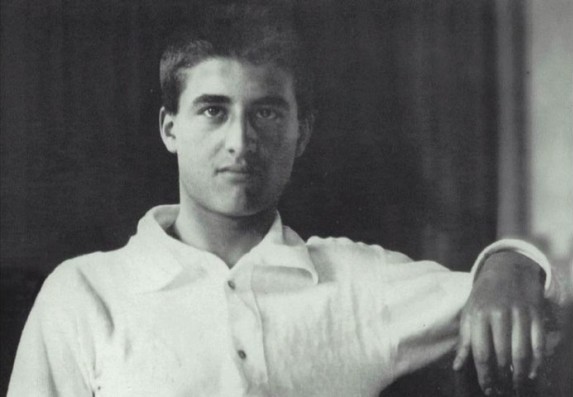
“Foolish is he who follows the pleasures of this world, because these are always fleeting and bring much pain. The only true pleasure is that which comes to us through faith”
– Blessed Pier Giorgio Frassati
"We are travellers…not yet in our native land" – St. Augustine

“Foolish is he who follows the pleasures of this world, because these are always fleeting and bring much pain. The only true pleasure is that which comes to us through faith”
– Blessed Pier Giorgio Frassati
I recently saw Mike Aquilina (happy birthday!) comment on Facebook that he was just returning from speaking at a conference on the Early Church Fathers. I had no idea that such things existed! How did I not know?!
Anyway, it turns out that there’s an annual Patristics seminar in October at St. Lambert’s Catholic Church near Chicago, Illinois:
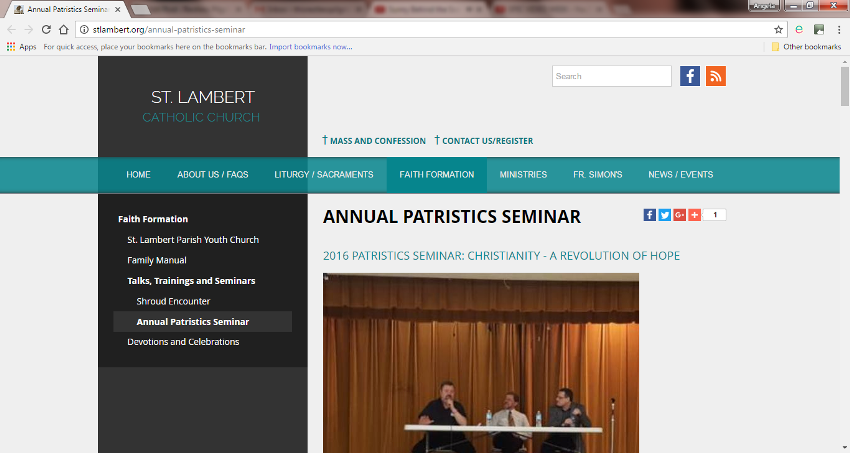
Although I’ve missed the seminar for this year, fortunately the parish’s website has the audio from the talks, as well as from their 2013 seminar with Dr. John Bergsma:
2016: A Revolution of Hope (Mike Aquilina & Dr. Jim Papandrea)
The First Pro-Life Movement: A Revolution in Human Dignity
The Inevitable Counter-Revolution: How and Why the Church was Persecuted
Saving Bodies, Saving Souls: A Revolution in Health Care
The Revolution of Religious Liberty: Myth and Reality
2013: Origins of Jewish and Christian Worship (Mike Aquilina & Dr. John Bergsma)
A Rite Tun
Outdoing Solomon
Language of Angels
The Garden and the Temple
 After a couple of weeks of Aramaic chant, we return to Contemporary Christian Music (CCM)…
When I was little, I was taught the rhyme “Red sky at night, Shepherd’s delight. Red sky in the morning, shepherd’s warning”. The idea being expressed in these couplets was that a red sky in the evening signalled good weather the following day, but a red sky in the morning bode poorer weather later in the day.
Today’s song is from Brandon Heath’s album Don’t Get Comfortable and is called “Red Sky”. Over the years it has been one of those songs I’ve reached for when life has been tough. It’s hard not to connect with the poetic plea for God to “Cover me with the red sky tonight, the promise of a better day to come”…
There’s a man on my street
He reminds me everyday
Better take what you can get
Cause there’s nothing more than this
Daylight fades into the ground,
Oh Lord I need You now
Cover me
With the red sky tonight
The promise of a better day to come
Sing over me
An angelic symphony
Tell me everything will be alright
With the red sky tonight
We’re so taking with our fear
Now we’re folded up in shame
With our feet nailed to the floor
We’re the only ones to blame
I can’t help but wonder why
Nobody bats an eye
You can see it in the faces
Of all the passers by
I’ll sail into the sun
And when the day is done
I need you in the night
To wake me in the dawn
I see you in the sun
When the day is done

Since I haven’t written about Jehovah Witnesses in a while, I thought that today I would address the origin of one of this group’s distinctive practices – exclusive use of the name “Jehovah”.

If you ever come across Jehovah’s Witnesses, either on the street or if they come to your door, it’s not unusual for them to emphasize that God’s name is “Jehovah” and the only appropriate name to be used in reference to Him. They might even go further and claim that other Christian groups have “hidden” the name of God despite, as we will see, that this word was first invented inside the Catholic Church.
 In the past I have toyed around with the idea of starting a podcast. For example, during Lent one year I produced a series of YouTube videos on the Epistle to the Philippians, I extracted the audio from each video and setup a podcast feed so that people could easily follow along with the study on their iPods. However, I never really committed to doing a podcast in its own right…until now.
At the bottom of this post, you’ll find the inaugrual episode of the new Restless Pilgrim Podcast where I outline this new project.
I’m sure there will be plenty of new challenges ahead as I try to do record a weekly podcast. Even in simply producing this short, initial episode I discovered that I say “um” in my speech far more often than I had imagined! However, I’m sure that this new endeavor will give me ample opportunity to grow, to learn more about the world of podcasting and hopefully to become a better evangelist, learning to articulate the truths of the Catholic Faith more clearly and charitably.
Episode 0: Inaugual Podcast (Download)
 In recent years, I’ve been delighted by the number of British entertainers who have won success and popularity in the US entertainment industry.
In particular, the unlikely candidate of James Corden has become extremely popular. He hosts The Late Late Show which includes “Carpool Karaoke”, a segment of the show where he drives around in a car with his guests, singing along to songs on the radio. As strange as it sounds, it’s highly entertaing!
Well, Rockford Diocese will not be outdone…
Honestly, I’ve been rather horrified by many of the exchanges I’ve seen among friends on Facebook recently on the subject of politics. So, as we enter the final few days before the Presidential Election, I thought it would be a good idea to share Meg Hunter-Kilmer‘s article on “How not to be a jerk online”: