One of the first things which struck me about the Qur’an the first time I read it was how it can suddenly and jarringly jump to a completely different scene,
I’ve often been told that the Torah and the Injil were only for the Jews. However, two problems: The Pickthall translation doesn’t hide it: He hath revealed unto thee (Muhammad)
John Fontain recently debated David Wood on the Islamic Dilemma, which points out that the Qu’ran both affirms the Torah and Gospel while contradicting them. John has a rather different
Those who attempt to say that the Qur’an teaches the corruption of the earlier scriptures, often appeal to Qur’an 5:48, but this argument turns on the translation of the word
I’m reading through the Qu’ran one last time this year and wanted to follow along with a Tafsir. I discovered Quran Garden which was just the sort of thing I
The Qur’an claims that if it were not from God, there would be many contradictions in it. However, there is one Qur’anic verse which presents an inherent contradiction! In chapter
The sun sets in muddy spring (18:86) Semen comes from between backbone & ribs (86:6-7) Stars are missiles to shoot devils (67:5) If a fly lands in your drink, one
The Qur’an speaks about Allah helping the followers of Jesus and keeping them “uppermost”, but this presents a dilemma since, historically, this has to refer to Trinitarian Christians… which is
This year, once again, we can expect the Catholic Church to offer significant discounts on all indulgences between Black Friday and Cyber Monday:
This is, of course, satire, but if you’re interested in learning about the authentic Catholic teaching concerning indulgences, I’d encourage you to listen to the latest episode of The Art of Catholic, where Matt Leonard speaks with Mary Moorman on this subject.
Millennials are the worst, right? Well, the other week I came across this fantastic article which presents the kind of proverbs King Solomon may have written if he was a Millennial:
Train up a child in either Apple or Android; and even when they are old they will not depart from it.
A wise man reads an article before commenting; a foolish man forms his opinion based on the preview title.
We enjoy finding ways to mean a little bit to a lot of people. This is called celebrity. But the real courage lies in daring to become a lot to a little. In daring to be everything to somebody
In today’s episode, we continue working our way through Book II of “Mere Christianity”. In the previous chapter, C.S. Lewis had examined “Rival Conceptions of God”, especially pantheism. In today’s episode he looks at another possible contender, dualism, the idea that there are two independent and opposing powers locked together in an eternal battle…
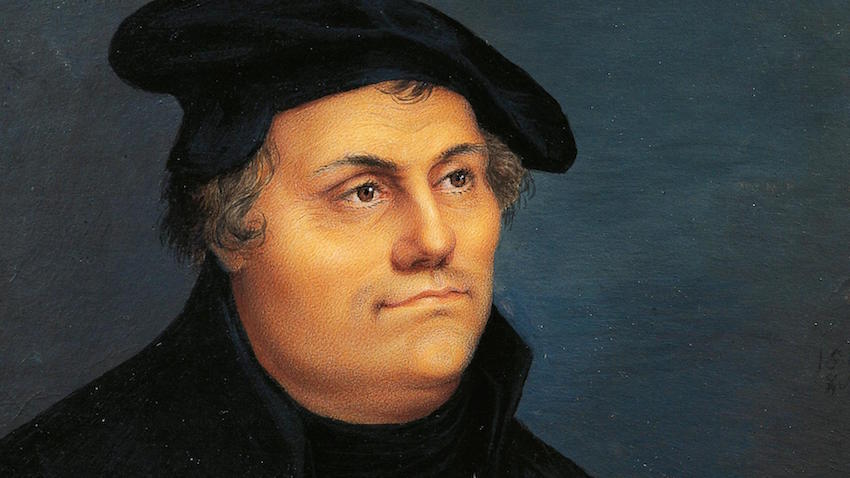
Since it is the 500th anniversary of the Reformation, Nessa and I are devoting the next to episodes to the two key doctrines of the Reformation: “Sola Fide” (Faith Alone) and “Sola Scriptura” (Scripture Alone). Today we’ll begin by looking at the first of these doctrines, Sola Fide.
• Over the next two weeks we’re going to look at “Sola Fide” (Faith Alone) and “Sola Scriptura” (Scripture Alone)
• Luther thought that Sola Fide was the central element of Christianity:
“If the doctrine of justification is lost, the whole of Christian doctrine is lost” – Luther, Lectures On Galatians
• I quoted from the Protestant apologetics site “Got Questions”:
“Sola fide or faith alone is a key point of difference between not only Protestants and Catholics but between biblical Christianity and almost all other religions and teachings. The teaching that we are declared righteous by God (justified) on the basis of our faith alone and not by works is a key doctrine of the Bible and a line that divides most cults from biblical Christianity…
If we abandon the doctrine of justification by faith, we abandon the only way of salvation…
The Bible teaches that those that trust Jesus Christ for justification by faith alone are imputed with His righteousness, while those who try to establish their own righteousness or mix faith with works will receive the punishment due to all who fall short of God’s perfect standard” – GotQuestions.org (Emphasis added)
• A key text for Luther in relation to his doctrine of Sola Fide was:
“For we maintain that a person is justified by faith apart from the works of the law” – Romans 3:28
However, when he translated it, he added an additional word:
“For we maintain that a person is justified by faith ALONE apart from the works of the law” – Romans 3:28
To justify this change, Luther responded thus:
“If your papist wishes to make a great fuss about the word sola [alone], say this to him: ‘Dr. Martin Luther will have it so, and he says that a papist and a donkey are the same thing.'” – An Open Letter on Translating by Martin Luther
(The term “papist” here refers to Catholics)
• Luther was a master at insults. So much so, that today you can generate an insult from the Luther Insult Generator.
• When Paul talks about “works”, he is talking about the works of the Mosaic Law. In fact, he spends a lot of time in his letters comparing the Old Covenant with Moses to the New Covenant with Jesus.
• There only verse of the Bible which speaks of “faith alone” is the following passage from the Epistle of James:
“You see that a man is justified by works and not by faith alone” – James 2:24
Luther referred to this epistle as an “epistle of straw” and he moved it to the appendix of his translation of the Bible:
“We should throw the Epistle of James out of this school, for it doesn’t amount to much. It contains not a syllable about Christ. Not once does it mention Christ, except at the beginning. I maintain that some Jew wrote it who probably heard about Christian people but never encountered any.” – Luther’s works, vol. 54: Table Talk
• Nessa asked about what a Catholic should do if he “has a beef” with the Catholic Church. I suggested that it would probably depend upon the kind of issue at hand:
1. Doctrinal Issue
If you disagree with Catholic doctrine, first of all make sure that what you’re rejecting actually is the Catholic teaching on the matter and not some distortion of it. Once you have done this, find yourself a knowledgable Catholic to explain the basis of the doctrine.
2. Issues of Scandal
Reform yourself first! Be an example for others to imitate, imitating St. Francis and St. Dominic.
• I discussed my approach when discussing the Epistle of James. I ask a series of questions:
1. Can a dead faith save you? No? So you’re saying that you need a faith that’s alive?
2. Can a barren faith save you? No? So you’re saying that you need a fruitful faith?
3. Can an incomplete faith save you? No? So you’re saying that you need a complete faith?
• This then leads to another round of questions:
1. How is faith given life?
2. How is a barren faith made fruitful?
3. What is the difference between a complete faith and an incomplete faith?
The answer, according to the Epistle of James, is “Works”. In his letter, James teaches that faith must be living, fruitful and complete:
1. Living Faith “In the same way, faith by itself, if it is not accompanied by action, is dead”
– James 2:17
2. Fruitful Faith “Do you want to be shown, you foolish fellow, that faith apart from works is barren?”
– James 2:20
3. Complete Faith “[Abraham’s] faith was made complete by what he did”
– James 2:22
• On the subject of faith and works, I quote CS Lewis who said:
“Christians have often disputed as to whether what leads the Christian home is good actions, or Faith in Christ…it does seem to me like asking which blade in a pair of scissors is most necessary”
– Mere Christianity
• The Catholic Church does not teach a works-based righteousness. She condemned this heresy (“Pelagianism”) in the Fifth Century!
• I quote Lewis a second time when he’s explaining how the divine life should be nurtured and protected:
“Your natural life is derived from your parents; that does not mean it will stay there if you do nothing about it. You can lose it by neglect, or you can drive it away by committing suicide. You have to feed it and look after it: but always remember you are not making it, you are only keeping up a life you got from someone else. In the same way a Christian can lose the Christ-life which has been put into him, and he has to make efforts to keep it. But even the best Christian that ever lived is not acting on his own steam – he is only nourishing or protecting a life he could never have acquired by his own efforts”
– Mere Christianity
• The pithiest summary of salvation really comes from St. Paul’s epistle to the Galatians:
“The only thing that counts is faith expressing itself through love” – Galatians 5:6
• Pope Emeritus Benedict articulated this in one of
Being “just” simply means being with Christ and in Christ. And this suffices. Further observances are no longer necessary. For this reason Luther’s phrase: “faith alone” is true, if it is not opposed to faith in charity, in love. Faith is looking at Christ, entrusting oneself to Christ, being united to Christ, conformed to Christ, to his life. And the form, the life of Christ, is love; hence to believe is to conform to Christ and to enter into his love. So it is that in the Letter to the Galatians in which he primarily developed his teaching on justification St Paul speaks of faith that works through love – Pope Benedict XVI, Wednesday Audience, 19th November 2008




 This is “The Confession” which won “Best Short Film” of the International Catholic Film Festival:
 Have you ever wondered what the Divine Mercy Chaplet would be like if it was set to music? Well, thanks to Matt Maher, wonder no more…