Transatlantically Speaking
Nothing about Faith today…I just wanted to share a rather amusing podcast I found from an Englishman living in the United States:
"We are travellers…not yet in our native land" – St. Augustine
Nothing about Faith today…I just wanted to share a rather amusing podcast I found from an Englishman living in the United States:
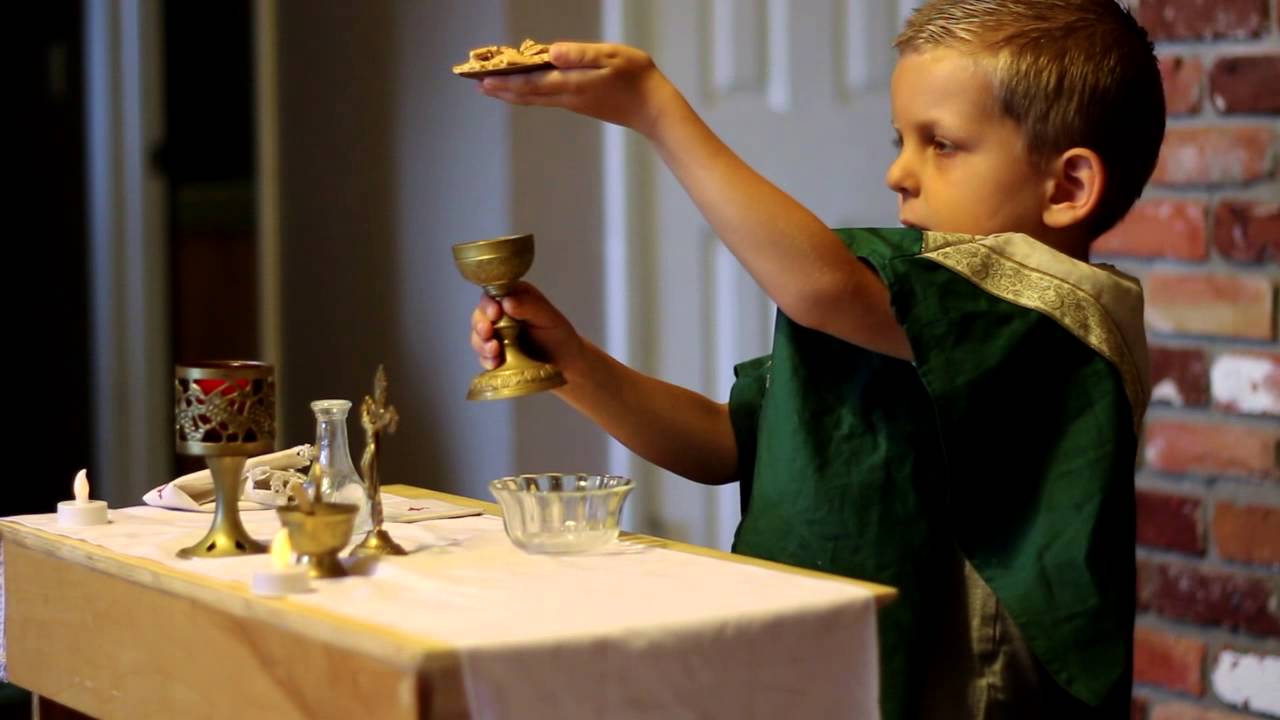 Brandon Vogt recently posted a new video of his son Isaiah playing the Mass (see before). Prepare yourself to see the most adorable thing you’ll see today…
The earliest depiction of Jesus’ crucifixion doesn’t, in fact, come from a Christian source. It is known as Alexamenos Graffito and, as the name suggests, it’s a piece of graffiti. It was found near Rome’s Palatine Hill and is dated sometime between 1st and 3rd Century:
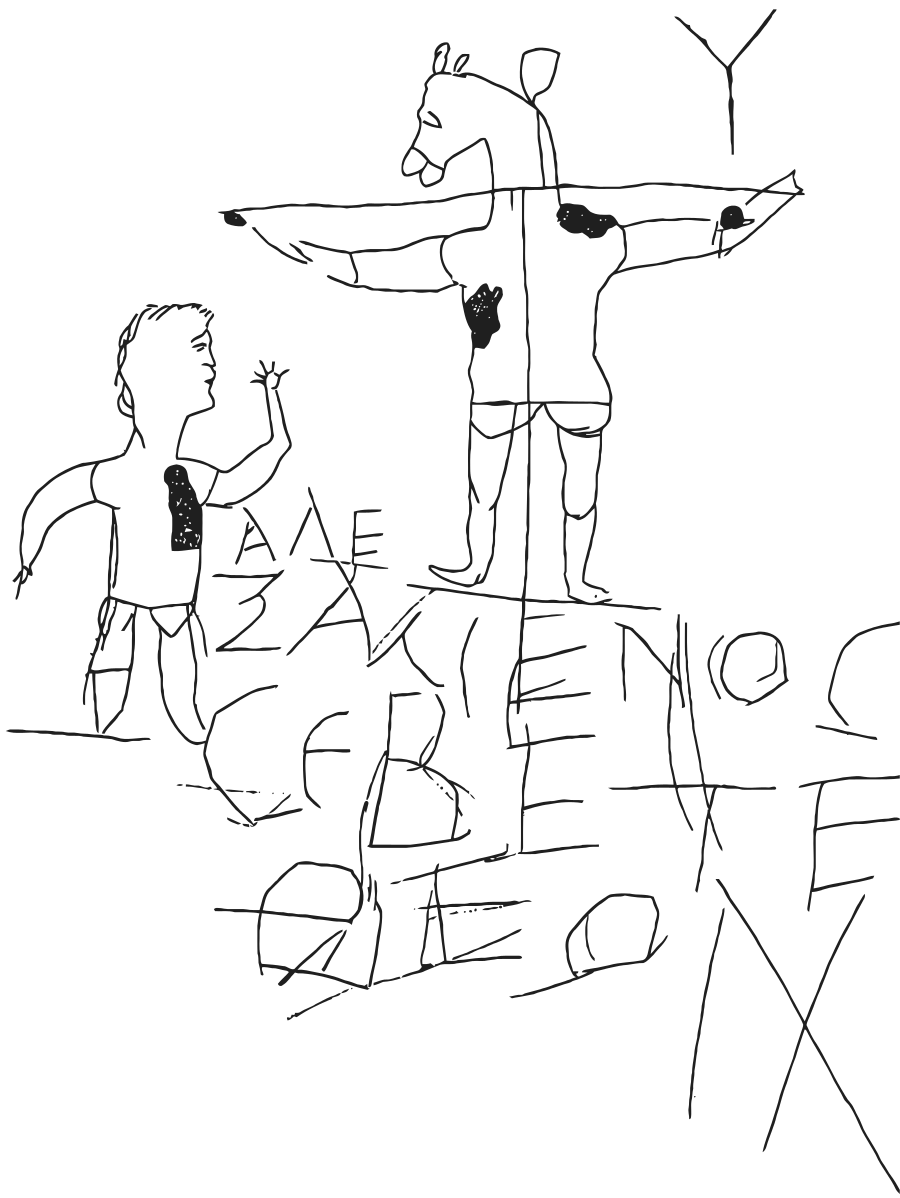
The text underneath the picture says in Greek “Alexamenos worships [his] God”. The picture itself shows Jesus on a cross with a donkey’s head, with another person on the left (presumably “Alexamenos”) raising his hand in worship. It’s clear that this was written by someone who knew Alexamenos and wanted to mock him and his Christian faith.
Continuing in my series of brief apologetic responses, today I would like to look at the subject of Saintly intercession. As I mentioned last time, these will not be thorough, nuanced rebuttals, but simply how I typically would reply when I only have a brief window of opportunity to respond to objections to my Faith.
I often see on internet forums the following common objection to Saintly intercession:
“You can’t pray to dead people”
In response to this objection I point out that the Saints are not dead:
“…have you not read what was said to you by God, ‘I am the God of Abraham, and the God of Isaac, and the God of Jacob’? He is not God of the dead, but of the living.” – Matthew 22:32
If Jesus says that the Saints (“Abraham…Isaac….Jacob”) are alive and well, then I think it’s pretty safe to assume that they are indeed alive. Last week we had the Feast of the Transfiguration when Jesus speaks with Moses…a “dead” man (Matthew 17:1-4). Therefore, it is incorrect to call those Christians who have passed away “dead”. They are more alive in God than they have ever been!
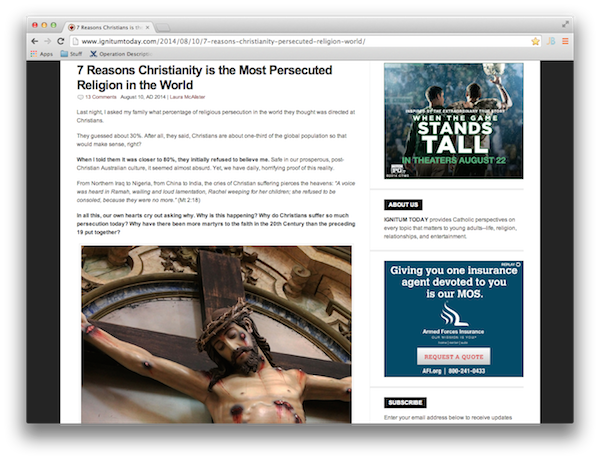
Particularly given what’s going on in Iraq at the moment, it is worth taking a few moments to consider why Christianity undergoes such persecution…
Today’s post is one of those blog entries which I wrote quickly wrote and then forgot to schedule for publishing. Well, better late than never…
Tonight I went to an Eastern Orthodox parish for Saturday Vespers and I was struck by how they decorated their church in preparation for Palm Sunday:
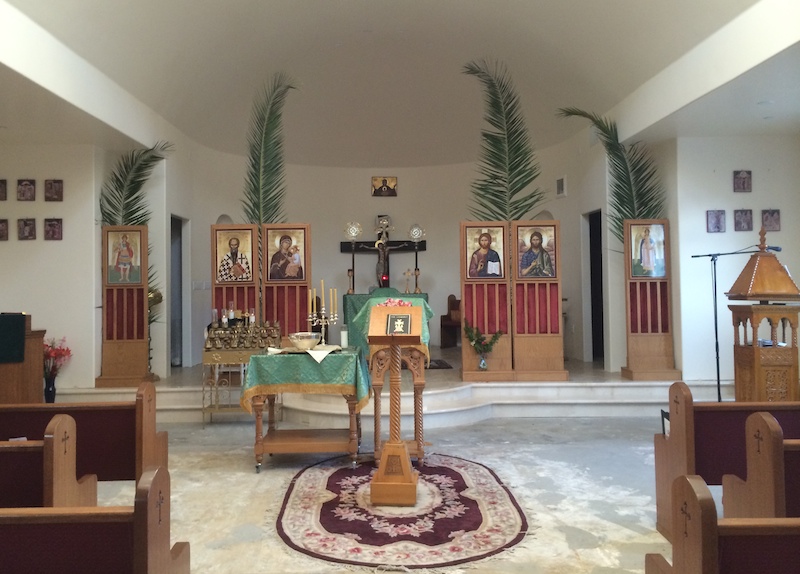
Now, the reason for decorating with palms was obvious, given that Sunday is called “Palm Sunday” and in the liturgy we’ll hear the account of Jesus being welcomed with palm branches:
The next day a great crowd who had come to the feast heard that Jesus was coming to Jerusalem. So they took branches of palm trees and went out to meet him, crying, “Hosanna! Blessed is he who comes in the name of the Lord, even the King of Israel!” – John 12:12-13
However, I got to wondering…why palms? Was there any significance to it?
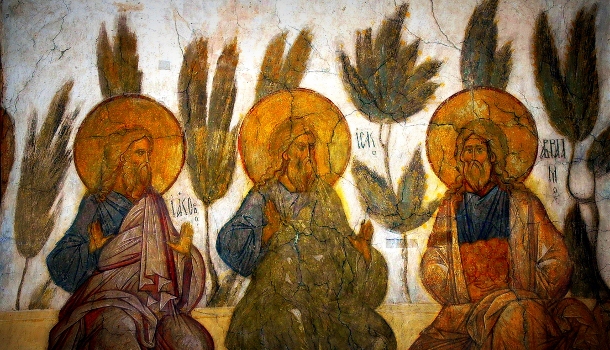
Thinking about it, I realized that many of the icons in my own parish featured palm branches. What was the symbolism? I was curious, so I went looking…
Up until now, all of the “Quick Apology” posts have dealt with Catholic-Protestant disputes. Today I would like to address a Theist-Atheist issue. I wrote this post several weeks ago, but I heard this specific objection was just a few days ago…
Probably as a result of the writings of the “New Atheists”, I’ve heard with increasing regularity the statement:
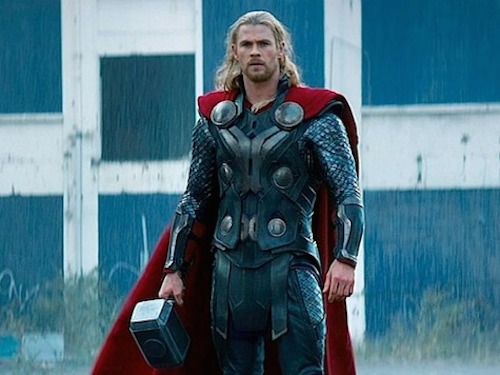
“You don’t believe in Thor do you? You’re almost an atheist – I just believe in one less god than you”
The suggestion here is that Christians are, in fact, basically atheists since they don’t believe in the gods of other religions. The atheist is just like the Christian except that she rejects the Christian God as well.
There’s the suggestion that, since Thor doesn’t exist, then neither does the God of Abraham, Isaac and Jacob. However, this doesn’t really follow, does it? After all, does the existence of counterfeit money mean that real money doesn’t exist? I hope not, otherwise I’ve worked 40 hours this week for nothing! Does the existence of counterfeit love mean that real love doesn’t exist? The recently dumped may think so, but I think generally we can agree that counterfeit love doesn’t disprove real love.
So, in conclusion, the non-existence of Thor has no bearing on the existence of Yahweh. The evidence for each must be weighed independently…