Over the next few months I’ll be writing some more about ancient Christian symbols (the fish, the anchor etc), but I thought I’d reboot my Symbolism Series by talking about something which caught my eye at Liturgy this morning.
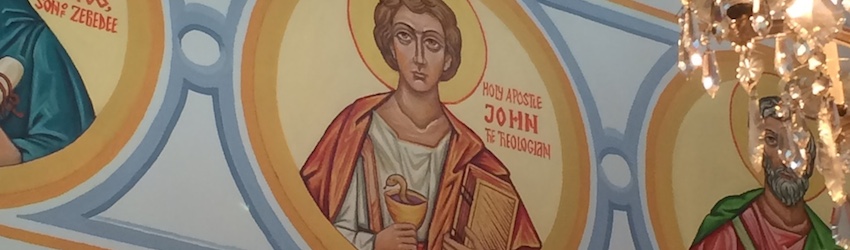
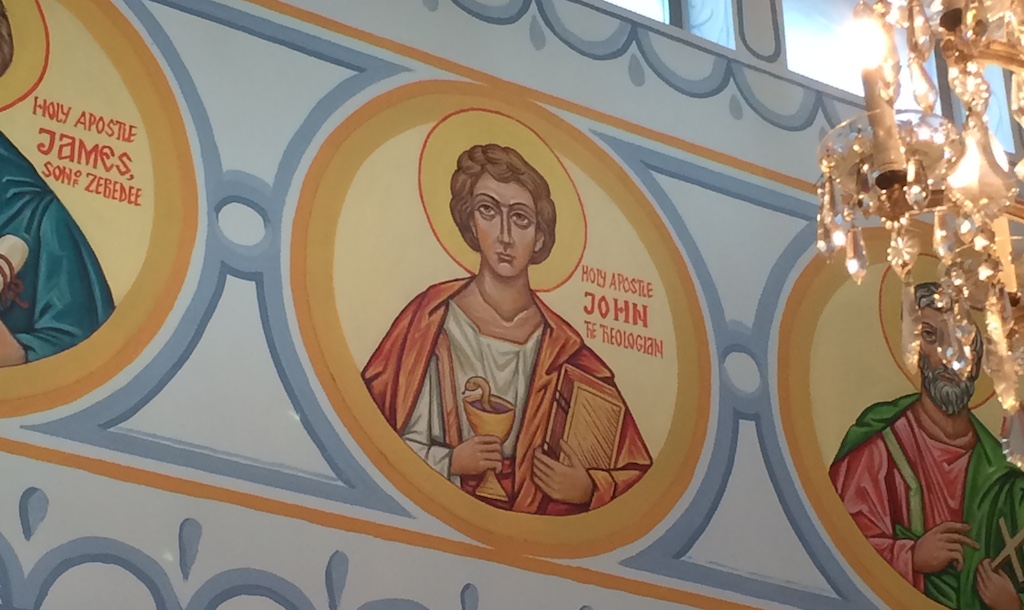
In my parish, around the inner portion of the dome, we have paintings of the Twelve Apostles (with St. Matthias replacing Judas). This morning I ended up sitting next to the following painting of St. John:
It occurred to me that, while I know the book he is holding is symbolic of his Gospel, I had no idea of the symbolism behind the chalice and snake. When I got home I needed to satisfy my curiosity, so I did some research…
This last weekend I joined the crowd of people outside Seattle’s Planned Parenthood. At 320 other locations around the country many others did likewise, protesting the country’s most well-known abortion provider. It was wonderful seeing all my friends from around the country posting their pictures on Facebook.
Much like last time in Seattle, the counter-protest presence was rather weak. I counted maybe six people who were identifiably there in support of Planned Parenthood. In contrast, the pro-lifers covered most of the city block:
As you can hopefully see, as usual there was a real cross-section of people present, both men and women, young and old. Read more
This afternoon I came across something which made me chuckle while I was out taking my afternoon stroll with Scott Hahn (Dr. Hahn couldn’t make it in person but was considerate enough to be present on my iPod).
I was walking through one of Seattle’s many lovely parks and I came across some children’s play equipment:
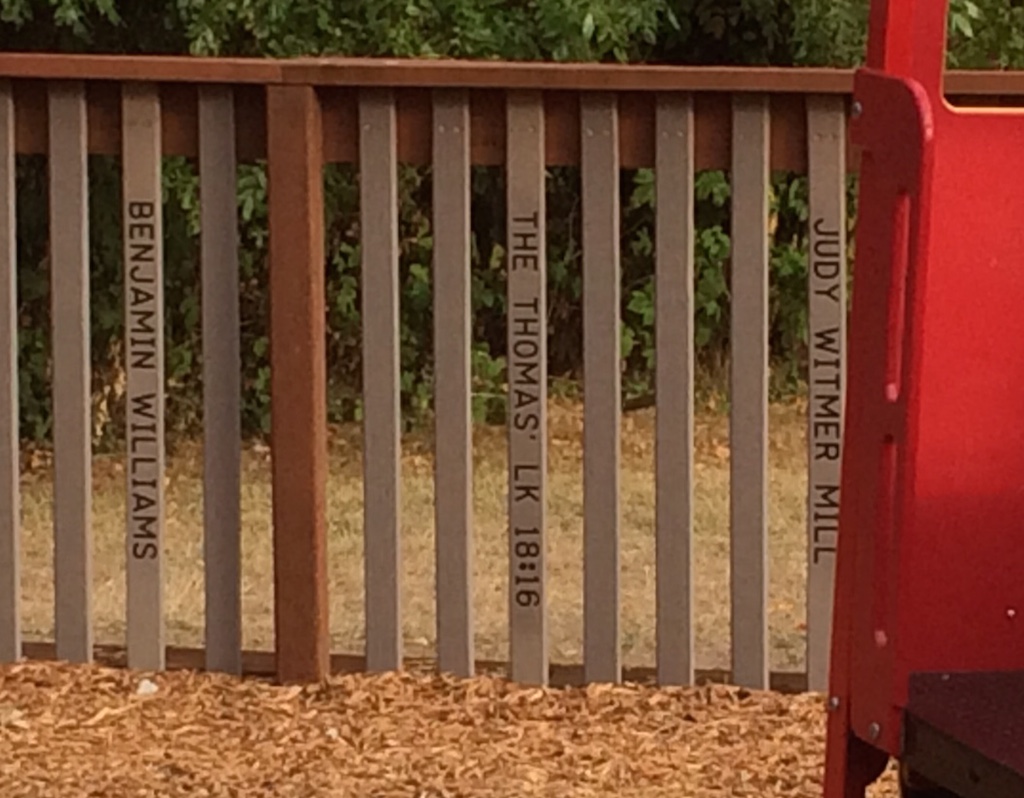
I noticed that the bars of the fence enclosing the area had names written on them. I assumed that these were the names of the donors who helped pay for the equipment. It was then that I noticed one particular entry:
The Thomas family appeared to have wanted a Bible verse included with their name. Their choice of verse made me chuckle. Can you guess what text is found in Luke 18:16?
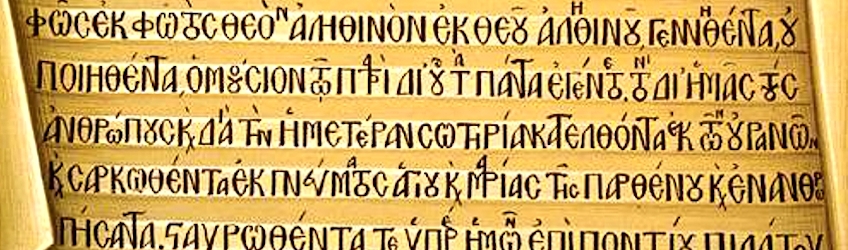
I could tell I was tired this morning… During the Divine Liturgy I went into autopilot as we sung the Creed, which unfortunately meant that I sang loudly “I believe in the Holy Spirit…who proceeds from the Father and the Son“. Oops!
In case you are unaware, in Eastern Christianity, the last part of that sentence is not included in the Nicene Creed. This creed was the product of two Ecumenical Councils, Nicaea and Constantinople, so technically we should call it the Nicene-Constantinoplean Creed.
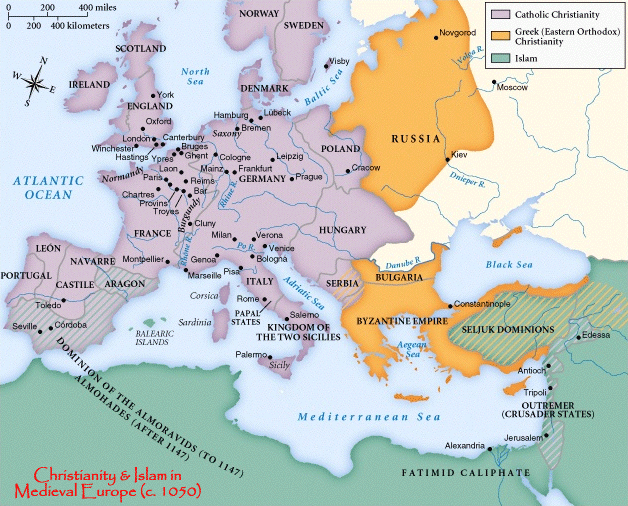
The argument surrounding the clause “and the Son” is known as the “Filioque Controversy”, since “Filioque” is the Latin word which was added to the Creed in the West. This controversy dates back to the Great Schism of 1054. The history surrounding it is a little complicated, but the long and the short of it is that one of the reasons much of the Eastern Church broke communion with Rome was due to the addition of this word to the Creed in the West.
However, my purpose in this post isn’t so much to speak about the Filioque, but to talk about another slip up I made today when I sang “God from God, Light from Light, true God from true God…”
More changes?!
Back when I lived in San Diego, I often attended the San Diego Orthodox Young Adults Group. Once when I was hanging out with them, one of my Eastern Orthodox friends asked me why the Catholic Church made so many changes to the Creed. What did he mean? There were changes in addition to the Filioque?! That was news to me! However, he then pointed out that in the West we say:
I believe in one Lord Jesus Christ, the Only Begotten Son of God, born of the Father before all ages. God from God, Light from Light, true God from true God,
In the East, however, the phrase in bold, “God from God”, does not appear!
Creedal Variations
I spent a little bit of time digging into this issue and I was rather surprised to find out that there were actually quite a few creedal variations in the ancient Church. In fact, you could go as far as to say that all the ancient versions differ at least to some degree from the official text given at Nicaea and Constantinople.
For example, the Councils used the first person plural throughout: “We believe… We confess… We await…”. However, the Byzantine Churches changed it to the first person singular: “I believe… I confess… I await”. Historically, the Latin Church did the same, although until relatively recently, English-speaking Catholics would say “We”. However, following the liturgical reforms of 2011 and retranslation of the Roman Missal to represent more faithfully the Latin text, all Catholics now say “I” instead.
Another textual variation in the Latin text is the one mentioned by my Eastern Orthodox friend. It is true that, in addition to the Filioque clause, the Latin liturgical text has another difference. In the Latin, it reads “Deum de Deo, Lumen de Lumine, Deum verum de Deo vero”, which translates as “God from God, Light from Light, true God from true God”. It turns out that the clause, “God from God”, although not found in the Creed from Constantinople, is actually found in the earlier creed from Nicaea. For some reason, this was retained in the Latin. The Armenian text includes this and other variations as well.
Conclusions?
So what should we conclude? I’m not really sure, but I think we can acknowledge two things. The first is simply that there is more variation in the “Nicene Creed” than we commonly think, and the second is that I need to make sure I have a nice cup of tea before I attempt to sing any complex theology in the mornings.
UPDATE: Michael Lofton just recorded a livestream with even more details on this subject:
Today I would like to discuss briefly a liturgical question of our time: should the congregation hold hands during the Our Father? In 1963, the Beatles sang “I wanna hold your hand”. Well, that’s all fine and good, but there’s a time and place for everything…
A couple of weeks ago a friend of mine sent me a link to an article which argues why the congregation should not hold hands during the Our Father. Broadly speaking, I agree with the arguments made in the article. However, when people bring up this subject, I often take a different tack to the explanation presented in the article…






 Today I would like to discuss briefly a liturgical question of our time: should the congregation hold hands during the Our Father? In 1963, the Beatles sang