Wise Words On Wednesday: The aim of argument
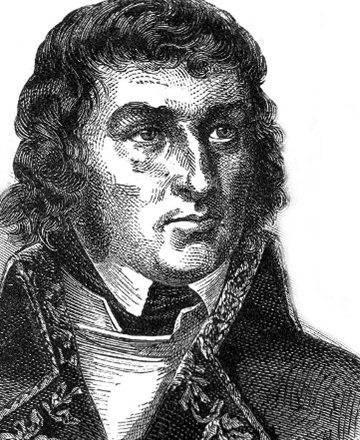
“The aim of argument or of discussion should not be victory, but progress”
– Joseph Joubert
"We are travellers…not yet in our native land" – St. Augustine
“The aim of argument or of discussion should not be victory, but progress”
– Joseph Joubert
 I’ve always been an avid fan of podcasts, but in recent months my habit has been increasing somewhat. Even while I was walking the Camino De Santiago, I’d listen to a couple of podcasts each day, catching up on shows such as The Art of Catholic, The Catholic Man Show, and Hobo For Christ.
Early on in my journey across Spain, iTunes recommended a podcast called “Buffering The Vampire Slayer”. This was a podcast about the popular Joss Whedon show, Buffy the Vampire Slayer, which tells the story of a teenage girl who fights the forces of darkness who converge upon her town of Sunnydale.
I had seen the movie while I was still a teenager and, although it was a little goofy, I rather enjoyed it. I was initially unconvinced by the subsequent TV adaptation, but I soon grew to like it. Throughout university, my housemate Andy and I would always set aside time to watch the latest episodes, as well as those of Buffy’s companion show, Angel. It’s therefore not much surprise that I decided to heed iTunes’ recommendation and give the podcast a go…

I recently read an article by Taylor Marshall, the author of the excellent book, The Crucified Rabbi. In this article, he shares with his readers that he has recently discovered that he has Jewish ancestry. Towards the end of his post, he addressed a concept which I’ve heard throughout my life, but to which I have never really given much thought. This is the idea that Judaism is matrilinial, that you’re considered a Jew if either you are a convert or your mother is Jewish.
This belief seems to be first officially found in the Mishnah, the Second Century codification of Jewish Oral Tradition. I did a little bit of research and found out that matrilinialism is still officially upheld by Orthodox Jews. In contrast, Karaite Judaism holds a patrilinial belief, saying that Judaism comes through the father, and Reformed Jewish groups favour a bilinial stance, saying that you’re Jewish if either parent is Jewish.
In his article, Dr. Marshall presents a number of very compelling Biblical examples to show that Judaism can’t be matrilinial:
1. The tribes of Ephraim and Manesseh
These were the sons of the patriarch Joseph and the heads of two tribes of Israel. Their mother was an Egyptian, the daughter of an Egyptian priest. If Judaism is matrilinial, that would exclude a sizable portion of the Twelve Tribes of Israel!
2. Moses
He married and had children with a Cushite (non-Israelite) woman.
3. David
We read in the genealogy of David of his grandfather Obed. He was the child of Boaz and Ruth who was a Moabite. If Judaism is matrilinial, Obed was not Jewish and, by extension, neither was King David!
I’ve seen some writers respond to these arguments by saying that the Jewish people (“a kingdom of priests, a holy nation”) only begin at Sinai with the giving of the Law. Other explanations say that the conversion of the foreign wife to Judaism is assumed even if the biblical text sees no need to explicitly narrate it.
However, as a Catholic, it doesn’t really matter whether Judaism is matrilinial or not, since every Catholic has a Jewish mother, Mary the Theotokos! As Pope Pius XII said in 1938 to a group of Belgian pilgrims, “Spiritually, we are Semites”.
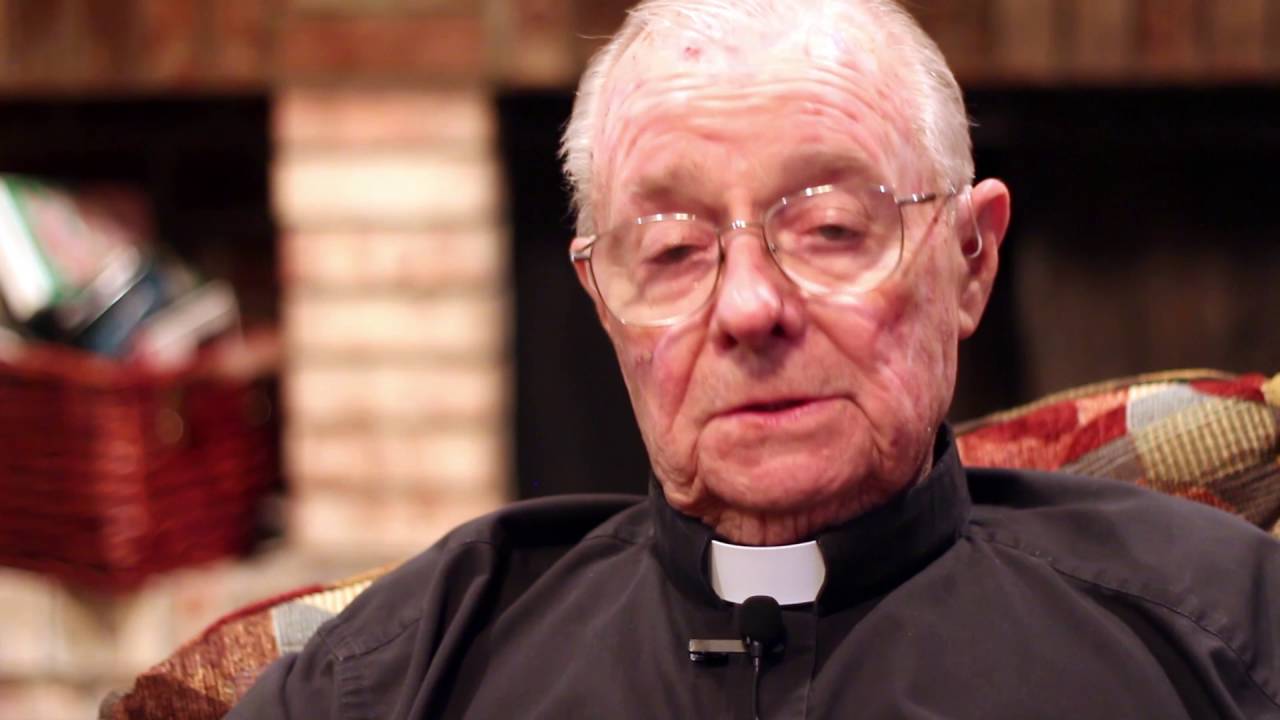 We are approaching the end of the Year Of Mercy. It’s officially ending on 20th November 2016. Because of this, I thought it was an appropriate time to share this video of Fr. Ed Thompson who was a friend of the great Archbishop Fulton Sheen:
 Since I quit Netflix, I’ve been binge-watching TED talks instead:

As many of you know, I recently moved back from Seattle to my old stomping ground of sunny San Diego. Unfortunately, I didn’t manage to get back in time for the Catholic Answers Summer Series where the speakers from the local apologetics apostolate give talks at different parishes around the Diocese. Fortunately, they’re available online!
Tim Staples: Behold your mother, Defending your faith
Jimmy Akin: Understanding the Book of Revelation
Karlo Broussard: Defending truth in a relativastic culture, God still matters
Patrick Coffin: Apologetics for chickens
Christopher Check: The Galileo Affair
Hey everyone! The Camino is going really well and I am now a little over half way to Santiago. My feet are a little tired, but nothing worse than that!
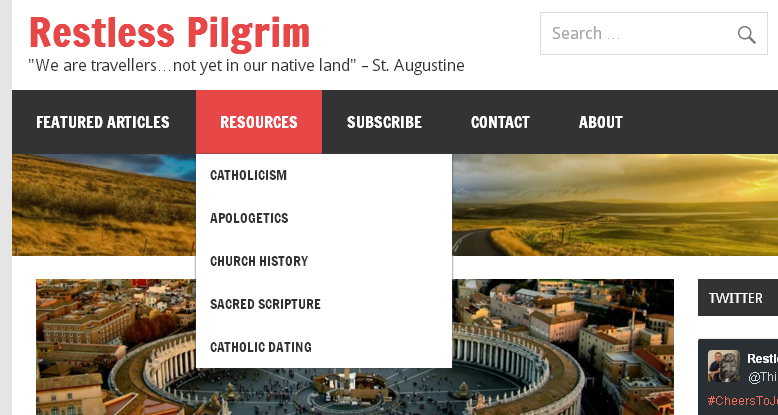
Where I’m currently staying at the moment has a computer so I wanted to briefly respond to a message I received from a friend who was looking for a few articles he knew I had written but couldn’t find. If you’re looking for something on this blog, you can use the search dialogue in the right corner of the website:

Not only that, you can also use the menu items along the header. Here there are a series of menu items which will take you to pages where I have attempted to highlight the more important articles on this site related to the subjects of Catholicism, Apologetics, Church History, Sacred Scripture and the always popular subject of Catholic Dating:
I’ll have computer access again in a couple of weeks once I’ve finished the Camino. Thank you for your prayers!