A most misunderstood doctrine: Purgatory
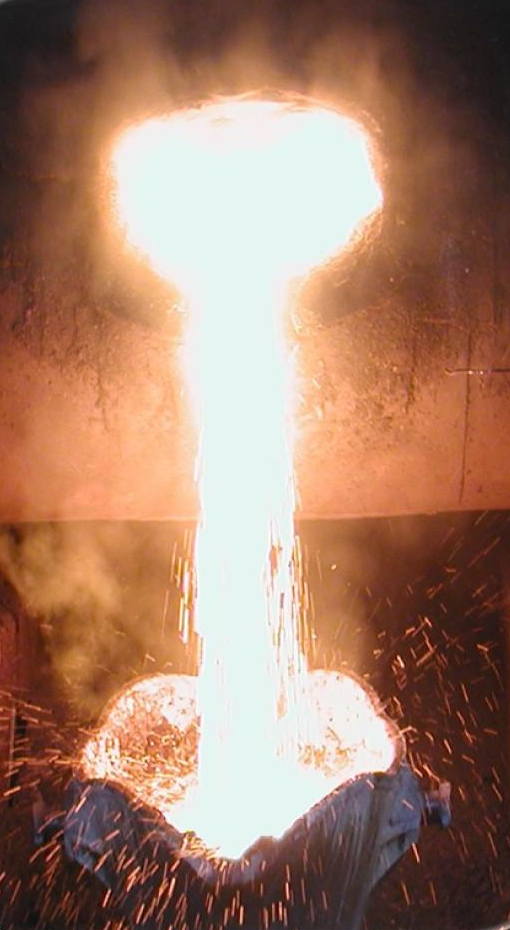
Today I’d like to look at one of the most misunderstood doctrines of the Catholic Faith: Purgatory.

I’m not going to try and give a thorough theological treatment of this doctrine; others infinitely more qualified than I have done that. Rather, I would just like to offer a few thoughts that have helped me in my own acceptance and understanding of this teaching.

The doctrine of Purgatory is something that a lot of non-Catholics struggle with, yet in an odd twist, it was actually one of the first Catholic doctrines I came to hold during my return journey to the Catholic Church.  I came to believe in it because it’s a doctrine that is beautiful, Scriptural and profoundly logical.

Odd Ideas

Unfortunately, it’s also one of those doctrines which is often poorly understood. For example, I’ve come across Catholics and ex-Catholics who were under the impression that Purgatory is basically Hell, or that Hell is still a possibility for those in Purgatory.  The Catholic Catechism denies both of these ideas, saying:

“[Purgatory is a] purification, so as to achieve the holiness necessary to enter the joy of heaven… [It is experienced by those]…who die in God’s grace and friendship, but [who are] still imperfectly purified…  This final purification of the elect…is entirely different from the punishment of the damned”

CCC 1030-1031

The common objection you hear from non-Catholics is “But ‘purgatory’ isn’t even mentioned the Bible!” And they’re right.  The word “purgatory” does not exist in the Bible, but then again, neither does “Trinity” nor “Hypostatic Union”, yet all mainstream Christians believe in both of these doctrines. A simple word-search is not enough to understand this teaching…
Read more

Introduction to Islam (Part 5 of 5): The Catholic Response

Today I would like to conclude my introductory series to Islam. This series wasn’t intended to be an apologetic response to Islam, just an accurate and objective description of Islamic belief and practice. It is my hope that this will lead to a better understanding of Islam by Christians.

Over the course of this series we have looked at the origins of Islam, Muhammad, the teaching of the Qur’an, as well as the faith and obligations of Muslim life.  I would now like to conclude by looking at what the Catholic Church had to say about Islam at the Second Vatican Council.

The Catholic Church sets forth its binding teaching regarding Islam in the “Declaration on the Relation of the Church with Non-Christian Religions” (also known as “Nostra Aetate”, literally “In our time”):

#1 In our time, when day by day mankind is being drawn closer together, and the ties between different peoples are becoming stronger, the Church examines more closely her relationship to non-Christian religions. In her task of promoting unity and love among men, indeed among nations, she considers above all in this declaration what men have in common and what draws them to fellowship.

One is the community of all peoples, one their origin, for God made the whole human race to live over the face of the earth. One also is their final goal, God…

The church says that she sees it her task to “promote unity and love”. This unity and love is fostered by considering what unites humankind and, in this “big picture” vision of the world, we are reminded that every single person comes from God and every single one will, some day, return to Him.

#2 … The Church, therefore, exhorts her sons, that through dialogue and collaboration with the followers of other religions, carried out with prudence and love and in witness to the Christian faith and life, they recognize, preserve and promote the good things, spiritual and moral, as well as the socio-cultural values found among these men.

Read more

Introduction to Islam (Part 4 of 5: Religion)

This blog entry continues the series I began a few days ago to provide a brief overview of Islam.

In Part 1, I began by looking at Muhammad and the origins of Islam.  Next, in Part 2, I looked at the message of Muhammad that is recorded in the Qur’an. Yesterday, in Part 3, I looked at what constitutes Islam’s core beliefs. Today I would like to look at the highly developed code of Islamic observance.

I have done my best to ensure factual accuracy in all these posts and have used Islamic sources as much as possible to ensure that I’m not propagating Christian misconceptions of Islam.  I did send this to some Muslim friends for comment, but I have yet to hear back. If you are a follower of Islam and believe that I have misrepresented your religion, please drop me an email and I will remedy the situation.

There are many obligations associated with Muslim.  For example, Muslims are not allowed to consume alcohol, pork, blood or carrion.  The most important aspects of “religion” in Sunni Islam are the “Five Pillars”:

1. Confessing the faith (shahada): This is the basic Muslim creed, similar to the Jewish Shema, but with the additional affirmation that Muhammad is a prophet:

“I testify that there is none worthy of worship except God and I testify that Muhammad is the Messenger of God.” – The Shahada

Read more

Introduction to Islam (Part 3 of 5: Faith)

I began this series examining the founding of Islam and the person of Muhammad. Next, I took a very broad look at the Qur’an and some of its teachings and application to Islamic life.

Islam demands of its believers “faith” and “religion”.  In today’s entry I would like to look at the “faith” of Islam.  I will deal with the demands of “religion” tomorrow.

As I said yesterday, I have done my best to ensure factual accuracy in all these posts and have used Islamic sources as much as possible to ensure that I’m not propagating Christian misconceptions of Islam.  I did send this to some Muslim friends for comment, but I have yet to hear back. If you are a follower of Islam and believe that I have misrepresented your religion, please drop me an email and I will remedy the situation.

The Articles of Faith within Islam are thus:

1.  The existence and unity of Allah: Muslims are absolute monotheists and unitarians.  Even the suggestion of any kind of subdivision or plurality of God is utterly rejected. Islam explicitly rejects the divinity of Christ and the doctrine of the Trinity.

Read more

Introduction to Islam (Part 2 of 5: Revelation)

In yesterday’s blog post I began a brief introduction to Islam.  I focussed primarily on the founding of Islam and Muhammad.

Today I would like to look at the divine revelation which Islam claims to have received, which is found principally in the Qur’an/Koran.

As I said yesterday, I have done my best to ensure factual accuracy in all these posts and have used Islamic sources as much as possible to ensure that I’m not propagating Christian misconceptions of Islam.  I did send this to some Muslim friends for comment, but I have yet to hear back. If you are a follower of Islam and believe that I have misrepresented your religion, please drop me an email and I will remedy the situation.

The Qur’an

As mentioned in my previous post, the Qur’an (literally, “the recitation”) is a compilation of the messages given to Muhammad.

Christians and Muslims understand the concept of scripture differently.  Christians describe the Bible, in the words of St. Paul, as being “God breathed” (theopneustos).  As Dei Verbum explains:

“In composing the sacred books, God chose men and while employed by Him they made use of their powers and abilities, so that with Him acting in them and through them, they, as true authors, consigned to writing everything and only those things which He wanted” – Dei Verbum, Chapter 3

Muslims, on the other hand, view the Qur’an as the word of God in the most literal sense, believing that the text bears no imprint of the writer’s character whatsoever. Rather, they believe that the Qur’an is the literal word of God, dictated to Muhammad, written down verbatim.

Read more

Introduction to Islam

This is one of the many blog entries I was halfway through before being distracted by something shiny… I started preparing this series of entries around the time of the media storm from the “Burn a Qur’an Day“. I was rather surprised by the reaction of many Christians to this dispute, but what I found even more troubling was their apparent lack of basic familiarity with the religion of Islam.

In this series of posts I will not be disputing any assertion made by Islam. I only intend to provide a brief sketch of the religion.  I would like this to be an introduction and brief overview for the average Christian who is unaware of Islam’s claims.

Please note, I have done my best to ensure factual accuracy in all these posts and have used Islamic sources as much as possible to ensure that I’m not propagating Christian misconceptions of Islam.  I did send this to some Muslim friends for comment, but I have yet to hear back. If you are a follower of Islam and believe that I have misrepresented your religion, please drop me an email and I will  remedy the situation.

Muhammad

Islam (“submission to God”) was founded by Muhammad in the early 7th Century, a little over six hundred years after Jesus’ ministry, seven hundred and sixty-six miles away from Jerusalem in Arabia.  In the early part of Muhammad’s life he was a successful trader and then, through marriage to a wealthy widow, he became an important figure.

Thanks to his wealth, at the age of forty, Muhammad was able to spend much of his time in meditation in a cave on the outskirts of Mecca. It is said that it was during this time that he began to receive messages from Allah (God) through Jibril (the Archangel Gabriel).  He was told that these messages were to be preached to all mankind.  They were subsequently written down by his companions and collected together to form the Muslim holy book: the Qur’an/Koran (literally “the recitation”).

Muhammad’s followers were initially fairly small in number, consisting mainly of his own family. There were soon violent persecutions in Mecca against the Muslims, causing Muhammad to move to Medina where Islam was more favourably received.  A little later, the first jihad (holy war) took place. Muhammad returned to Mecca and destroyed the idols there and within eight years Muslim armies had conquered (and effectively converted) the whole of Arabia.

Read more

Beginning Ignatius’ letter to Polycarp

Well, we’re finally here!  The last letter of St. Ignatius of Antioch!  I’m posting this a bit earlier than usual because the next couple of weeks are going to be rather busy.

Each of the Ignatius’ letters are special for different reasons, but his letter to Polycarp, the bishop of Smyrna, holds a special place in my heart.

In some ways it reminds me of the book of Proverbs, since Ignatius often offers Polycarp advice in the form of short exhortations.

This is the only personal letter Ignatius wrote to a fellow bishop and should, in my not so humble opinion, be required reading for all pastors and all those who minister in the Church.

When I have friends who enter the seminary, they usually receive a card from me with a quotation which comes from somewhere in this letter.  Whenever I become discouraged in the ministries in which I serve, this is the document I usually dig out.

“St. Ignatius of Antioch’s letter to Polycarp” PDF
“St. Ignatius of Antioch’s letter to the Polycarp” Audio

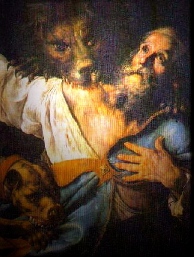
I said this was Ignatius’ last letter, but that is not strictly true, for there was one final letter he wrote, to both his “God Jesus Christ” and to the “Catholic Church”. However, this was a letter of a different kind…  Rather than being written in private, this letter was written in an amphitheatre before thousands of jeering Romans.  Rather than using parchment, he used his own flesh and, in place of ink, his own blood.

St. Ignatius, pray for us.

1 55 56 57 58 59