I originally had the following post scheduled for this weekend, but since yesterday Joe posted an article entitled Defending the Deuterocanon Book by Book (Part 1), I thought I’d post it a little earlier…
In case you were unaware, Catholic Bibles are bigger than Protestant Bibles. Protestant Bibles are lacking the following books:
Tobit, Judith, Wisdom, Sirach, Baruch, 1 Maccabees, 2 Maccabees, … …as well as three chapters of Daniel (3:24-90; 13; 14) and six chapters of Esther (10:14-16:14)
Occasionally I run across a non-Catholic who insists that this Deuterocanonical books (referred to as the “apocrypha” by Protestants) should not be part of the Bible. I don’t usually get too much into the apologetic arguments in favour of the inclusion of the Deuterocanon, although they certainly do exist. Instead, I just invite the person simply to read them! I usually suggest that they start with Wisdom, Sirach and Tobit as they’re my favourites.
Before they do that though, I always invite them to start by the following extract from Wisdom, to which I’ve added a series of underlined New Testament hyperlinks. Does any of this sound strangely familiar?
…the ungodly by their words and deeds summoned death… they reasoned unsoundly, saying to themselves…
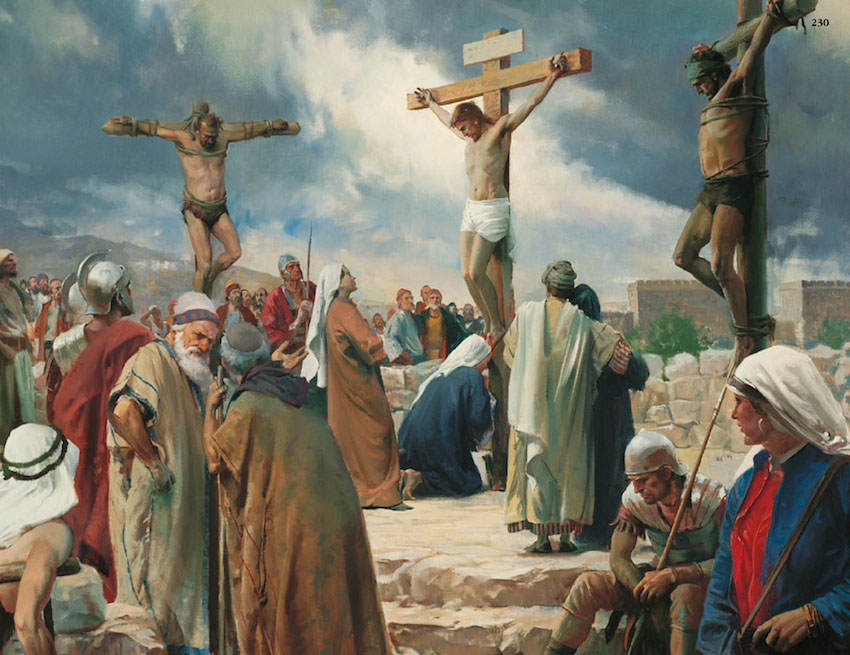
Let us see if his words are true, and let us test what will happen at the end of his life; for if the righteous man is God’s son, he will help him, and will deliver him from the hand of his adversaries. Let us test him with insult and torture, that we may find out how gentle he is, and make trial of his forbearance. Let us condemn him to a shameful death, for, according to what he says, he will be protected.” Thus they reasoned, but they were led astray, for their wickedness blinded them, and they did not know the secret purposes of God, nor hope for the wages of holiness, nor discern the prize for blameless souls…”
Thirteenth Sunday in Ordinary Time: July 1st, 2012
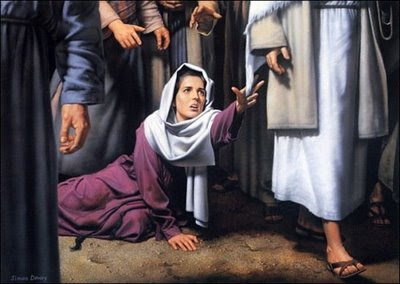
There are a number of common themes found among the Reading for Mass this week. Death is the subject our First Reading from the Book of Wisdom and it is found again in our Gospel. The theme of Faith in God’s saving power is also present. In our psalm we sing “I will praise you, Lord, for you have rescued me” and in our Gospel Reading we hear of two such individuals who reached out to Jesus in faith and were blessed.
As we come to the Eucharist this week, let us fall at the feet of Jesus, reach out with expectant faith, praying for the Lord to restore us to the fullness of life.
In times of spiritual cooling and laziness, imagine in your heart those past times when you were full of zeal…remember your past efforts and the energy with which you opposed those who wished to obstruct your progress. These recollections will reawaken your soul from its deep sleep, will invest it anew with the fire of zeal, will raise it, as it were, from the dead and will make it engage in an ardent struggle against the devil and sin, thus returning to its former rank. -St. Isaak of Syria
Saturday was the last installment of my “Do’s and Don’ts of Leading Bible Study” series. I’ve decided to create this short post to aggregate all the different entries in the series:
I have used this blog series to capture some of my experience in leading Bible study, as well as record some of the hard lessons I’ve had to learn. It is my hope that this will be a useful resource for anyone new to leading a Bible study group, such as the many new people we’ve recently had leading in the JP2 Group.
DO: Be welcoming…just not too much…
When I began this series, I had hoped that there would be more discussion. Unfortunately, despite these posts getting a large number of hits, there was fairly little feedback in the Comment Boxes.
Therefore, over the next few days I’m going to be emailing this post to everyone I know who has been involved in leading Bible studies, discussion groups or are involved in leadership in some kind of way 🙂
I invite you to do the same 😀
Even if you’re not a Bible study leader, what have been some good experiences and bad experiences you’ve had in a Bible study group?
What, in your opinion, makes for a good Bible study?
Today is the final post in my series on leading a Bible study (Part 1 | Part 2 | Part 3 | Part 4 | Part 5). Here are my concluding Do’s and Don’ts:
DON’T: Forget the heart
I’m a very “head” oriented person. When I study the Bible I like to pull apart texts, examine the words, look at the historical background and get straight to the meaning of the text. It is only after I’ve done all this that I’m ready to engage with the Scripture on a “heart” level. However, I know that in this I am an oddity! I find that most people engage with Scripture on an emotional level much earlier in the process. Therefore, to lead an engaging bible study I must accommodate this and allow people to respond emotionally to the Scripture before we’ve dissected every technical detail of the text.
DON’T: Forget the head
…having said that, don’t neglect the exegesis. I have been to Bible studies before which have been nothing more than a “feeling sharing group”. That was all anyone ever talked about, how they felt about the text! The actual meaning of the text wasn’t even examined.
DO: Keep the hippy, tree-hugging stuff to a minimum… 😉