Mere Christianity – Book I – Chapter 1 (“The Law of Human Nature”)

Book 1

Notes & Quotes

Here are my notes for the first chapter of Mere Christianity. In this chapter, Jack argues two main points:

1. There is a Law of Human Nature

“…the man who makes [these objections] is not merely saying that the other man’s behaviour does not happen to please him. He is appealing to some kind of standard of behaviour which he expects the other man to know about”

“Quarrelling means trying to show that the other man is in the wrong. And there would be no sense in trying to do that unless you and he had some sort of agreement as to what Right and Wrong are; just as there would be no sense in saying that a footballer had committed a foul unless there was some agreement about the rules of football”

(a) The Law of Human Nature is the only one which we can choose to disobey

“a body could not choose whether it obeyed the law of gravitation or not, but a man could choose either to obey the Law of Human Nature or to disobey it… As a body [a man] is subjected to gravitation…if you leave him unsupported in mid-air, he has no more choice about falling than a stone has…but the law which is peculiar to human nature…is the one he can disobey if he chooses”

(b) You may still find a few people who don’t really know the Law of Human Nature

“…you might not find an odd individual here and there who did not know it, just as you find a few people who are colour-blind or have no ear for a tune”

(c) Differences in morality are not that great

“…some people say…different civilisations and different ages have had quite different moralities. But this is not true. There have been differences between their moralities, but these have never amounted to anything like a total difference”

“…think what a totally different morality would mean. Think of a country where people were admired for running away in a battle, or where a man felt proud of double-crossing all the people who had been kindest to him. You might just as well imagine a country where two and two made five”

(d) Those who deny a real Right and Wrong will accidentally betray themselves

“He may break his promise to you, but if you try breaking one to him he will be complaining ‘It’s not fair’ before you can say Jack Robinson”

We see the presence of the Moral Law more clearly in our reactions, rather than our actions.

2. We do not keep this Law 

(a) That doesn’t change the Law itself

“…people sometimes get their sums wrong; but they are not a matter of mere taste and opinion any more than the multiplication table”

(b) Our excuses prove we do not keep the Law

“If we do not believe in decent behaviour, why should we be so anxious to make excuses for not having behaved decently?”

(c) We demonstrate the Law by only make excuses for the bad things, not the good.

“…you notice that it is only for our bad behaviour that we find all these explanations. It is only our bad temper that we put down to being tired or worried or hungry; we put our good temper down to ourselves”

Discussion Questions

1. What does Lewis argue we can we learn from the way people quarrel?

2. Why should we believe that the Law of Human Nature is real?

3. Do you think it’s true that we don’t live according to the Law of Human Nature?

C.S. Lewis Doodle

Mere Christianity – Foreword

Foreword

Notes & Quotes

Here are my notes from the Foreword of Mere Christianity which, in my edition is written by Kathleen Norris. Her words are in green and Lewis’ are in dark blue.

1. CS Lewis served in the trenches of World War I

2. During the Battle Of Britain, CS Lewis was an air raid warden and gave talks to the men of the Royal Air Force

3. These pilots had a life-expectancy of thirteen bombing missing and therefore these talks were not purely academic endeavours

“This book, then, does not consist of academic philosophical musings. Rather it is a work of oral literature, addressed to a people at war”

4. This therefore makes the content of his talks all the more surprising

“How strange it must have seemed to turn on the radio, which was every day bringing news of death and unspeakable destruction, and hear one man talking…about decent and humane behavior, faith play, and the importance of knowing right from wrong”

5. Lewis gets to the heart of the matter…

“All of our notions of modernity and progress and all our advances in technological expertise have not brought an end to war. Our declaring the notion of sin to be obsolete has not diminished human suffering”

6. …and tells us where the problem is

“The problem, C. S. Lewis insists is us

7. Lewis told his friends that this generation had never in fact been told in basic terms what Christianity is all about.

“Lewis seeks…to help us see the religion with fresh eyes, as a radical faith whose adherents might be likened to an underground group gathering in a war zone, a place where evil seems to have the upper hand, to hear messages of hope from the other side”

8. Lewis explains his outlook on humanity

“Lewis once stated, that ‘there are no ordinary people’ and that ‘it is immortals whom we joke with, work with, marry, snub and exploit’

9. Lewis calls his readers/listeners to embrace the fullness of life by embracing Christianity

“The Christianity Lewis espouses is humane, but not easy…we must decide what sort of immortals we wish to be… As Lewis reminds us, with his customary humor and wit, ‘How monotonously alike all the great tyrants and conquerors have been: how gloriously different the saints’

Discussion Questions

1. In what way do you think war influenced Jack in writing this book and in the way it was received?

2. Why did Jack decide to make this presentation of Christianity?

3. How would you describe his Christianity?

Wise Words on Wednesday: Giver of every good gift

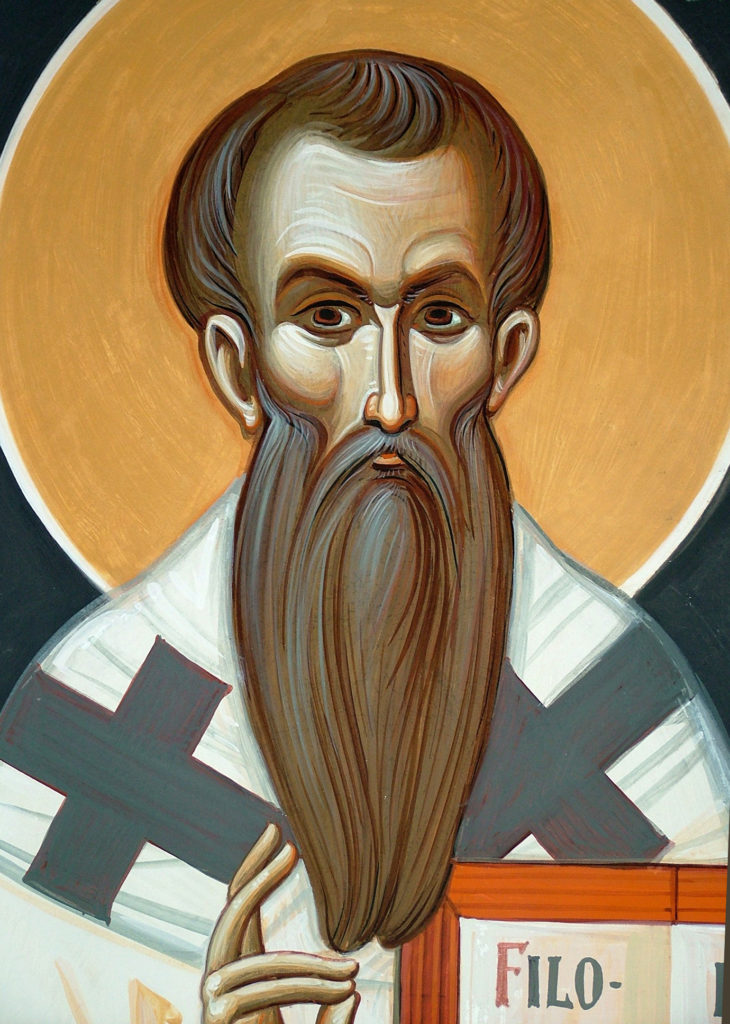
basil-the-great

As you take your seat at table, pray… offer thanks to the Giver…remember Him Who supplies you with this gift, to make your heart glad and to comfort your weakness. Has your need for taking food passed away? Let not the thought of your Benefactor pass away too.

As you are putting on your tunic, thank the Giver of it. As you wrap your cloak about yourself, feel yet greater love to God…

Is the day done? Give thanks to Him Who has given us the sun for our daily work, and has provided for us a fire to light up the night and to serve the rest of the needs of life”

– St. Basil

Help! What should we call this?

Microphone

HELP PLEASE! My friend Nessa and I are starting a podcast, but we need help with the name…

We’ve been meeting up for the past few weeks to record some prototype episodes. Each one has been 15-30 minutes long and topics have been pretty broad-ranging:

  • “Worship in the Early Church”
  • “Dating non-Catholics”
  • “Getting more out of the Mass”
  • “13 Reasons Why”
  • “Getting to grips with the Old Testament”
  • “An introduction to Confession”

…what should we call the podcast?

Music Monday: Que Tu Corazón vuelva a latir

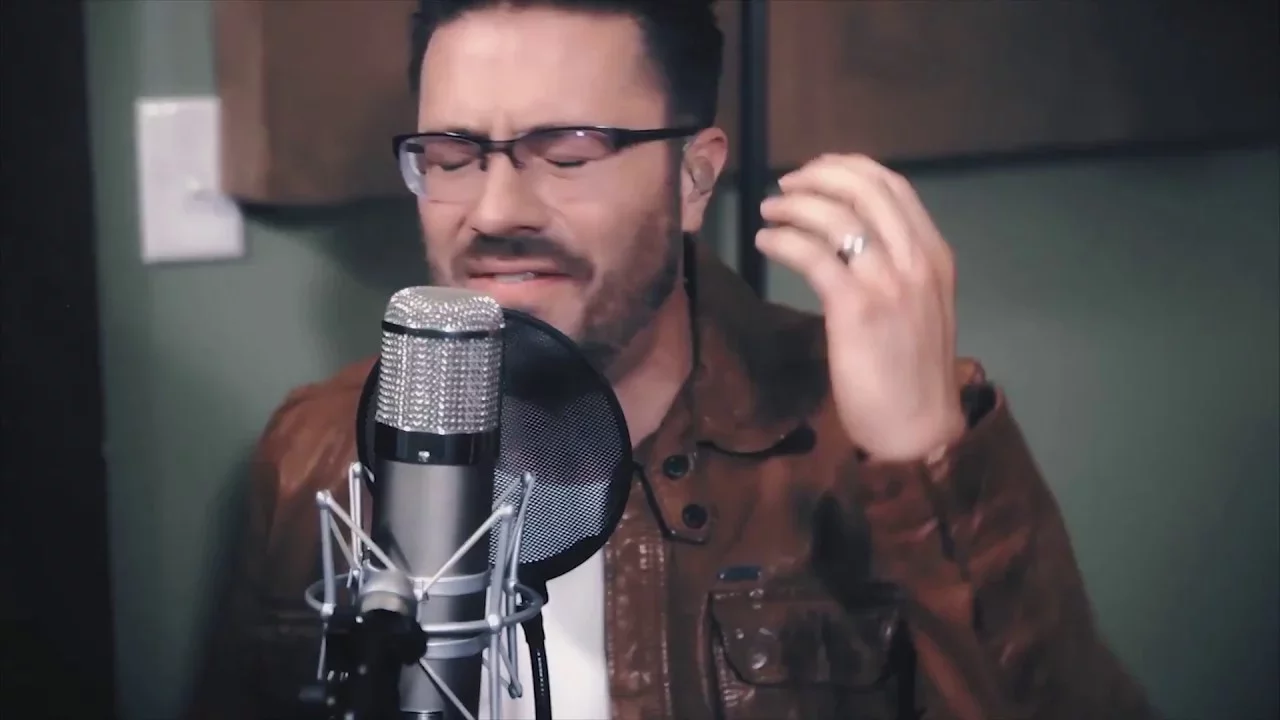
Last year I shared a song sung by Danny Gokey, Tell your heart to beat again, as well as its background story. This morning YouTube let me know that a Spanish version of the song has been recorded:

Destrozado como nunca antes
Y tu vida está rota en mil pedazos, que dolor
Y las palabras no importan ya
Cuando este mundo te trata mal
Y piensas que nunca serás
El mismo de antes otra ves

Dile a tu corazón que hoy vuelva a latir
Y la oscuridad se irá, con su gracia y su verdad
El ayer quedo atrás, ya no vives ahí más
Deja atrás todo el dolor y hoy vuelve a vivir

Comienza desde el principio otra vez
Todo está bien, la sanidad del amor llego
Levántate a caminar y que el sol brille sobre ti
Porque tú historia no ha acabado
Un viaje nuevo va a empezar

Que toda herida y desamor
Sean una memoria viva
De aquel que te ayudo
Pues el amor todo lo ve
Y el cielo está obrando todo para ti bien

Mere Christianity – Preface

Preface

As I mentioned yesterday, I will be publishing my notes as I read through “Mere Christianity” by CS Lewis.

Notes & Quotes

Today I am working through the Preface where CS Lewis (“Jack”) speaks about the book itself…

1. The book was based on a series of radio talks which were subsequently published in three separate parts. 

2. We are told that this book will not be of help to anyone trying to decide between two denominations. 

“…I have thought that the best…service I could do for my unbelieving neighbours was to explain and defend the belief that has been common to nearly all Christians at all times”

(a) Many of the issues relate to high theology or history and should only be tackled by experts.

“I should have been out of my depth in such waters: more in need of help myself than able to help others”

(b) Discussing disputed points doesn’t encourage non-Christians to convert

“Our divisions should never be discussed expect in the presence of those who have already come to believe that there is one God and that Jesus Christ is His only Son”

3. Instead, Jack is going to defend what Baxter calls ‘mere’ Christianity. Richard Baxter was a 17th century Anglican minister and uses the term in his book “The Saints’ Everlasting Rest”. When Jack refers to “Uncle Toby” in this section, he is referring to a character in “Tristam Shandy”, a book by Laurence Sterne. When asked about the duties of a marriage man, the book’s character replies that “they are written…in the Common-Prayer Book”.

“That part of the line where I thought I could serve best was also the part that seemed to be thinnest”

(a) In an effort to present a ‘mere’ Christianity, he sent the manuscript for Book II to a number of clergymen (Anglican, Methodist, Presbyterian, Roman Catholic).

“So far as I can judge…the book…did at least succeed in presenting an agreed, or common, or central, or ‘mere’ Christianity”

(b) Even this ‘mere’ Christianity was formidable… Jack uses the Latin phrase “Odium theologicum” which means “theological hatred”.

“…it may possibly be of some help in silencing the view that, if we omit the disputed points, we shall have left only a vague and bloodless [Highest Common Factor]. The H.C.F. turns out to be something not only positive but pungent”

(c) …which at least points to why we should be reunited

“If I have not directly helped the cause of reunion, I have perhaps made it clear why we ought to be reunited”

4. He asks his readers to refrain from speculation as to why he does not mention some disputed issues.

“I should be very glad if people would not draw fanciful inferences from my silence on certain disputed matters”

(a) This is because sometimes…

(i) …he is sitting on the fence…

“There are questions at issue between Christians to which I do not think we have been told the answer”

(ii) …but other times he is not.

(b) You cannot conclude whether or not he thinks the matter important

“…you cannot even conclude, from my silence on disputed points, either that I think them important or that I think them unimportant. For this is itself one of the disputed points”

(c) He doesn’t want to talk about issues with which he has no experience

“I have a reluctance to say much about temptations to which I myself am not exposed. No man, I suppose, is tempted to every sin. It so happens that the impulse which makes men gamble has been left out of my make-up; and, no doubt, I pay for this by lacking some good impulse of which it is the excess or perversion”

6. Two particular disputed matters are mentioned

(a) The Blessed Virgin Mary

“The Roman Catholic beliefs on that subject are held not only with the ordinary fervour that attaches to all sincere religious belief, but…with…chivalrous sensibility that a man feels when the honour of his mother or his beloved is at stake…contrariwise…Protestant beliefs on this subject…it seems that the distinction between Creator and creature (however holy) is imperilled”

(b) Contraception

“I am not a woman nor even a married man, nor am I a priest. I did not think it my place to take a firm line about pains, dangers and expenses from which I am protected; having no pastoral office which obliged me to do so”

7. He addresses those who object to his use of the word “Christian”, who wish to use it more generally to those who are Christ-like

(a) Lewis shows how the word “gentleman” has been drained of all its meaning following a similar “deepening” of meaning

“When a word ceases to be a term of description and becomes merely a term of praise, it no longer tells you facts about the object: it only tells you about the speaker’s attitude to that object… A gentleman, once it has been spiritualised and refined out of its old coarse, objective sense, means hardly more than a man whom the speaker likes”

(b) If the term “Christian” refers to an interior disposition which we can never know, the word becomes useless

“…Christians themselves will never be able to apply it to anyone. It is not for us to say who, in the deepest sense, is or is not close to the spirit of Christ. We do not see into men’s hearts… And obviously a word which we can never apply is not going to be a very useful word”

“When a man who accepts the Christian doctrine lives unworthily of it, it is much clearer to say he is a bad Christian than to say he is not a Christian”

8. We are told that ‘mere’ Christianity is not a replacement for existing creeds, but is instead a hall

“It is more like a hall out of which doors open into several rooms”

(a) The goal is to get into a room

“…it is in the rooms, not in the hall, that there are fires and chairs and meals. The hall is a place to wait in, a place from which to try the various doors, not a place to live in”

(b) The room we entered shouldn’t be based on taste, but on truth

“…you must be asking which door is the true one; not which pleases you best by its paint and panelling…Are these doctrines true: Is holiness here?”

(c) We should be kind to those in other rooms and those in the hall

“…be kind to those who have chosen different doors and to those who are still in the hall. If they are wrong they need your prayers all the more; and if they are your enemies, then you are under orders to pray for them. That is one of the rules common to the whole house”

Discussion Questions

1. What do you think about Jack’s decision to not get into denominational disputes?

2. Do you think that ‘mere’ Christianity is sufficient?

3. What are the reasons he sometimes doesn’t mention controversial topics?

4. What do you make of his comments about contraception?

5. What analogy does Jack use to describe ‘mere’ Christianity and the different denominations? What advice does he give?

1 183 184 185 186 187 551